Table of Contents
- What Makes a Toilet Run Constantly
- Tools and Safety Prep Before You Start
- How to Diagnose a Toilet Running Constantly
- How to Adjust Toilet Float Height
- Toilet Flapper Replacement Cost and When to Replace
- Water Waste from a Running Toilet: What It Costs You
- When to Stop DIY and Call a Plumber
- Conclusion
What Makes a Toilet Run Constantly
A toilet running constantly is a plumbing fixture problem where water continuously flows from the tank into the bowl without stopping between flushes. The sound is unmistakable: a low hiss or trickle that never quite goes away. The core issue is almost always a failure in the tank’s fill and flush cycle. Water enters the tank through the fill valve, rises to a set level, and then stops. When you flush, the flapper valve opens, water drains into the bowl, and the cycle starts again. When any component in that chain fails to seal or signal correctly, water keeps moving when it shouldn’t.
The Four Most Common Culprits
The four most common causes of a toilet running constantly are:
- A worn or warped flapper valve that no longer creates a watertight seal against the flush valve seat
- A misadjusted or broken fill valve that either overfills the tank or never shuts off
- A float set too high, causing water to spill continuously into the overflow tube
- Sediment buildup or debris jamming the fill valve open or preventing the flapper from closing fully
Pro Tip
A running toilet is sometimes called “phantom flushing” because the tank will periodically refill on its own with no one touching the handle. If you hear your toilet cycling every 20-30 minutes, a slow flapper leak is almost certainly the cause.Tools and Safety Prep Before You Start
Gather your tools before you open the tank. Most toilet repairs require nothing exotic.
What you’ll need:
- Adjustable pliers
- Flathead and Phillips screwdrivers
- Replacement flapper (match your toilet brand if possible)
- Replacement fill valve (optional, for advanced repair)
- Sponge and small bucket
- Rubber gloves
- Paper towels or old rags
Before you touch anything inside the tank:
- Locate the shut-off valve on the water supply line behind the toilet, at the wall. Turn it clockwise until it stops.
- Flush the toilet once to drain most of the water from the tank.
- Remove the tank lid carefully and set it flat on a towel; porcelain lids crack easily.
- Dry your hands before handling any electrical components nearby.
The water inside a toilet tank is clean, not waste water. The shut-off valve is the only true safety step here, and skipping it turns a 30-minute repair into an emergency.
How to Diagnose a Toilet Running Constantly
Diagnosing a toilet running constantly starts with one simple observation: lift the tank lid and watch what’s happening inside before you touch anything.
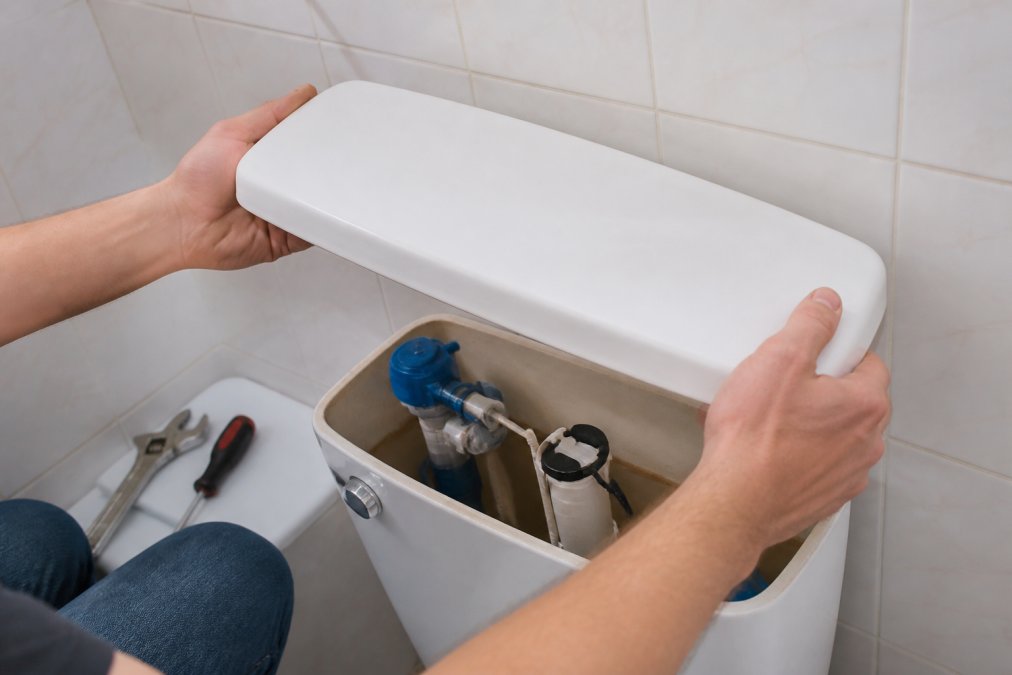
Close-up of a person's hands carefully lifting a white porcelain toilet tank lid in a bright, tiled bathroom, revealing the flapper valve, fill valve, and float cup components inside Look at the water level first. If water is spilling into the overflow tube (the tall open tube in the center of the tank), the float is set too high or the fill valve is stuck open. If the water level is below the overflow tube but the toilet is still running, you almost certainly have a flapper seal problem.
Step 1: Check the Flapper Valve
The flapper valve is a rubber seal that sits at the bottom of the tank and covers the flush valve opening. When it degrades, warps, or accumulates mineral deposits, it stops creating a watertight seal.
The dye test is the fastest way to confirm a flapper leak:
- Drop a few drops of food coloring into the tank.
- Do not flush. Wait 15 minutes.
- Check the toilet bowl. If color appears in the bowl water, the flapper is leaking.
A leaking flapper is the single most common cause of a toilet running constantly. Inspect the flapper directly: press down on it with your finger while the toilet is running. If the running stops, the flapper isn’t sealing properly and needs replacement.
Also check chain tension. If the chain connecting the flush handle to the flapper is too short, it holds the flapper slightly open. If it’s too long, it can get caught under the flapper and prevent a full seal.
Step 2: Inspect the Fill Valve and Refill Tube
The fill valve controls water entering the tank after a flush. A worn-out or debris-clogged fill valve can stick in the open position, causing water to run indefinitely.
To inspect the fill valve:
- With the tank lid off and water supply on, observe whether water continues to run even after the tank reaches its normal level.
- Lift the float cup by hand. If the water stops, the float height needs adjustment. If water continues even with the float lifted fully, the fill valve itself is faulty and needs replacement.
- Check the refill tube. This is the small flexible tube that runs from the fill valve into the overflow tube. The refill tube should sit just above the top of the overflow tube, not inserted inside it.
According to EPA WaterSense program guidance on toilet efficiency, older toilets and those with worn components are among the leading causes of household water waste.
Step 3: Look for Sediment Buildup and Debris
Sediment buildup inside the fill valve is a frequently overlooked cause of a toilet running constantly, especially in areas with hard water. Mineral deposits accumulate inside the valve cap and prevent it from closing fully.
To clean sediment from the fill valve:
- Turn off the water supply at the shut-off valve.
- Hold down the fill valve shaft with one hand. With the other, turn the valve cap counterclockwise about an eighth of a turn and lift it off.
- Place your hand over the open valve and turn the water supply back on briefly. The water pressure will flush debris upward and out.
- Replace the cap, restore water supply, and observe whether the valve now shuts off correctly.
Debris removal takes under five minutes and solves a surprising number of fill valve problems without any replacement parts.
How to Adjust Toilet Float Height
Float height controls the water level inside the tank. Set it too high and water spills into the overflow tube, creating a constant run. Set it too low and you get weak flushes.
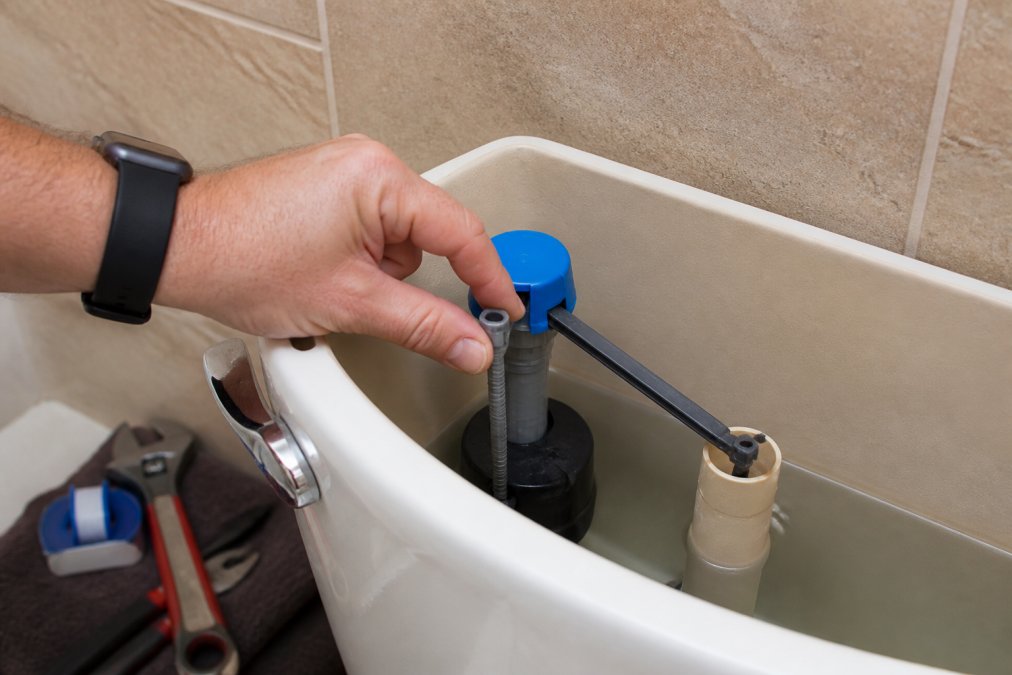
A person's hand adjusting the float cup on a vertical fill valve inside an open toilet tank, with the water level line and overflow tube clearly visible in the background, bathroom tiles in soft natural light The correct water level sits approximately one inch below the top of the overflow tube. Most modern toilets use a float cup that rides up and down on the fill valve shaft. Older toilets use a ballcock with a floating ball on an arm.
To adjust a float cup:
- Locate the adjustment clip or screw on the fill valve shaft.
- Pinch the clip and slide it down the shaft to lower the water level, or up to raise it.
- Flush the toilet and observe where the water level settles. Repeat until it stops about one inch below the overflow tube rim.
To adjust a ballcock float arm:
- Bend the float arm gently downward to lower the water level.
- Some models have an adjustment screw at the pivot point instead.
- Flush and check. The water should stop well below the overflow tube.
Watch Out
Never adjust the float so high that water reaches the overflow tube. Water spilling into the overflow tube means the fill valve never shuts off, which can waste thousands of gallons per month and significantly increase your water bill.Toilet Flapper Replacement Cost and When to Replace
Toilet flapper replacement is one of the most affordable DIY plumbing repairs available. Replacement flappers are sold at hardware stores for a modest cost, and the installation takes most homeowners under ten minutes.
When to replace the flapper rather than clean it:
- The rubber feels stiff, cracked, or warped to the touch
- Mineral deposits are visible on the seating surface and won’t wipe clean
- The dye test confirms a leak even after you’ve adjusted the chain
- The flapper is more than five years old in a high-use household
How to replace a toilet flapper:
- Turn off the water supply at the shut-off valve and flush to empty the tank.
- Unhook the flapper ears from the pegs on either side of the flush valve.
- Disconnect the chain from the flush handle arm.
- Take the old flapper to the hardware store or photograph it to match the size and style. Brand-specific flappers provide better seal integrity.
- Attach the new flapper ears to the flush valve pegs.
- Connect the chain to the flush handle arm, leaving about half an inch of slack.
- Restore water supply and test.
According to the American Society of Plumbing Engineers technical resources, proper seal integrity at the flush valve is critical to preventing water loss in residential plumbing fixtures.
Repair Type Typical DIY Time Parts Needed Difficulty Flapper replacement 10-15 minutes Replacement flapper Beginner Float height adjustment 5-10 minutes None Beginner Fill valve cleaning 10 minutes None Beginner Fill valve replacement 20-30 minutes Replacement fill valve Intermediate Flush valve seat replacement 45-60 minutes Seat or full kit Advanced Water Waste from a Running Toilet: What It Costs You
The water waste from a running toilet is not a minor inconvenience. A toilet running constantly can waste an enormous volume of water every day, most of it invisible because it drains directly into the bowl and down the sewer line.
According to the USGS Water Science School on household water use, a continuously running toilet can waste anywhere from 200 to over 1,000 gallons of water per day depending on the severity of the leak and the water pressure in the supply line. Over a month, that represents a significant spike in your water bill.
The environmental cost matters too. Water conservation isn’t just a regulatory concern: it’s a real-world impact on municipal water systems, especially during dry seasons when supply is under pressure. Fixing a toilet running constantly is one of the highest-impact water conservation actions a household can take.
Signs the running toilet is hitting your water bill:
- Your monthly bill increased without a clear explanation
- The water meter continues to move when all fixtures are off
- You hear phantom flushing several times per day
A quick meter check confirms a running toilet’s impact. Turn off all water fixtures in the house, then watch the meter for five minutes. Any movement indicates a leak somewhere in the system.
Key Takeaway
A toilet running constantly is not just annoying, it’s a steady drain on your water bill and a waste of a shared resource. Most causes are fixable in under 30 minutes with parts that cost very little. The longer you wait, the more it costs you.When to Stop DIY and Call a Plumber
Most toilet running constantly issues are genuinely DIY-friendly. But there are situations where the problem is deeper than a flapper or float, and pushing forward without professional help risks making things worse.
Call a licensed plumber when:
- You’ve replaced the flapper and adjusted the float, but the toilet is still running
- The fill valve continues to run even with the float lifted fully and the valve cleaned
- You notice water on the floor around the base of the toilet
- The shut-off valve behind the toilet won’t close fully or is corroded
- The overflow tube itself appears cracked or damaged
- Your toilet is more than 20 years old and has had multiple component failures
A straightforward fill valve replacement or flush valve seat repair is typically a short visit. The PUR Plumbing team has been serving the area for over 25 years with fully loaded vehicles, which means technicians arrive ready to handle most toilet repairs in a single visit. The team is residentially and commercially licensed, so whether the running toilet is in a home bathroom or a commercial facility restroom, the repair is handled correctly the first time.
If you’ve worked through all the diagnostic steps above and the toilet is still running, that’s the signal to stop troubleshooting and call someone who can see exactly what’s happening inside the plumbing fixture.
A toilet running constantly is almost always a solvable problem, but it demands attention sooner rather than later. The water waste adds up quickly, and what starts as a worn flapper can eventually point to a deeper fill valve or flush valve seat issue. If you’ve worked through the steps in this guide and the problem persists, contact PUR Plumbing for a fast, professional diagnosis. With more than 25 years of experience and fully loaded service vehicles, the team arrives ready to fix the problem right, not just patch it.
Frequently Asked Questions
What is the most common cause of a running toilet?
A worn or warped flapper valve is the most common cause. The flapper sits at the bottom of the toilet tank and creates a seal that holds water until you flush. When the rubber degrades or the chain tension is off, water trickles past the seal continuously, triggering the fill valve to keep refilling the tank. Checking and replacing the flapper is always the right first step when diagnosing a toilet running constantly.
How much does a running toilet increase my water bill?
A running toilet can waste anywhere from 200 to over 1,000 gallons of water per day depending on the severity of the leak. At average residential water rates, that can add $50 to $200 or more to a monthly bill. Silent leaks from a faulty flapper or fill valve are often missed for weeks, compounding both water waste and cost. A simple dye test in the tank can confirm whether water is leaking before you see it on your bill.
Why does my toilet randomly run for a few seconds every 10 minutes?
This pattern is called phantom flushing. It happens when a slow leak allows water to drain from the tank past a failing flapper valve. Once the water level drops enough, the fill valve activates to refill it. The cycle repeats every few minutes. Replacing the flapper typically resolves phantom flushing. If the problem continues after a new flapper is installed, the fill valve or the overflow tube height may need adjustment.
Do I need a plumber to fix a running toilet?
Many running toilet repairs, replacing a flapper, adjusting float height, or clearing sediment from a fill valve, are DIY-friendly and require basic tools. However, if the fill valve is cracked, the shut-off valve is corroded, the water supply line is damaged, or the problem keeps returning after repairs, a licensed plumber should assess it. Persistent issues often point to water pressure problems or worn internal components that need professional diagnosis.
This article was written using GrandRanker
CALL 727-475-1474 and 813-579-1920


CFC 1427929
Serving Pasco County 25+ Years
info@purplumbing.com
Why Is My Toilet Running Constantly? Fix It Fast
August 21, 2026 | Blog
- Reageer
For more information or to request an appointment dial 727-475-1474 and 813-579-1920
Serving Pasco County 25+ Years, info@purplumbing.com
Carrollwood
Clearwater
Dunedin
Holiday
Land O Lakes
Lutz
New Port Richey
Oldsmar
Palm Harbor
Plant City
Saint Petersburg
Tampa
Tarpon Springs
Temple Terrace
Town N Country
Trinity
West Chase
Site Designed by GoProLocal