Table of Contents
- Immediate Actions During a Plumbing Emergency
- How to Shut Off Water Main and Stop Water Flow
- Emergency Plumbing Checklist: What to Do First
- Handling a Burst Pipe Emergency
- Responding to Other Common Plumbing Emergencies
- Emergency Plumbing Repair Cost and What to Expect
- When to Call Emergency Services vs. an Emergency Plumber
- Preventing Future Plumbing Emergencies
- Frequently Asked Questions
Last Updated: October 10, 2026
Immediate Actions During a Plumbing Emergency
A plumbing emergency demands fast action, the first few minutes determine how much damage occurs. Your immediate steps stop water flow and protect your property.
Stay calm and move through these priorities in order:
- Stop the water flow immediately, this is your first priority
- Turn off electricity if water is near outlets or appliances
- Contain the leak with towels, buckets, or containers
- Document everything for your insurance claim
- Call a professional, do not wait
The difference between a $500 repair and a $5,000 disaster often comes down to how quickly you act in those first minutes.
Pro Tip
Keep a flashlight and work gloves near your main water shutoff valve. When panic hits, you won’t have time to search for tools. Mark the valve location clearly so anyone in your home can find it fast.How to Shut Off Water Main and Stop Water Flow
Your main water shutoff valve can save thousands in water damage. Most homeowners have never located theirs. Find it now, before you need it.
Turning the main shutoff valve stops water flow to every pipe, faucet, and appliance, preventing continued flooding.
Where to find your main shutoff valve:
- In the basement: Check along the wall where the water line enters from outside. Look near the foundation.
- In a utility closet: Many homes have it tucked into a dedicated space near the water heater.
- Outside the home: Some properties have the valve in a box at ground level near the street or property line.
- Under the sink: Older homes sometimes have it under the kitchen sink.

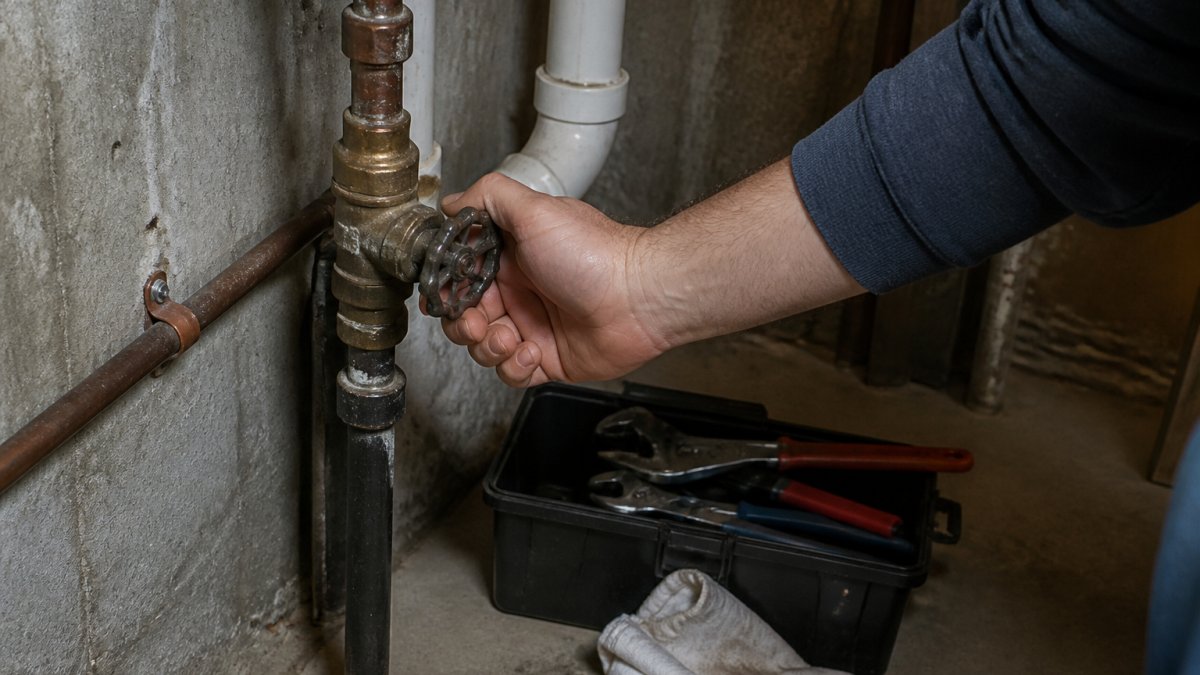
Homeowner’s hand turning the main water shutoff valve in a basement near exposed pipes, with concrete walls and dim lighting How to shut off the water:
Identify which type you have: Ball valve (lever handle, turn 90 degrees perpendicular to the pipe) or Gate valve (wheel or knob, turn clockwise until it stops). Turn slowly and steadily; forcing it can break the valve.
Once the valve is off, test your work. Go to a sink and turn on the faucet. No water should come out. If water still flows, the valve may be stuck or broken. Call an emergency plumber immediately.
Watch Out
If you cannot locate your main shutoff valve or it will not turn, water will keep flowing. Call emergency services right away. Do not assume you can manage this alone, professional help stops the damage faster than searching for a valve you cannot find.Emergency Plumbing Checklist: What to Do First
A checklist keeps you focused during a plumbing emergency. Work through these steps in order.
Contain the Leak
Place towels and buckets under the leak to contain water. Move valuables, electronics, and furniture away from the water. Open windows for air circulation. Towels and buckets reduce damage while you call for help.
Protect Your Property
Move electronics, documents, furniture, and irreplaceable items to dry areas. Prioritize family photos and documents, your insurance can replace most other things.
Document for Insurance
Photograph the leak source, water damage, and affected areas from multiple angles. Save all photos and videos to cloud storage immediately.
Keep records of the time, date, actions taken, who you called, and receipts for emergency supplies. This documentation protects your insurance claim.
Action Timing Why It Matters Stop water flow Immediately Prevents ongoing damage Contain the leak First 5 minutes Reduces spread to other areas Move valuables First 10 minutes Saves irreplaceable items Document damage Before cleanup Supports insurance claim Call professional Within 30 minutes Stops secondary damage Handling a Burst Pipe Emergency
A burst pipe is one of the most serious plumbing emergencies. Water pours out uncontrolled, and damage escalates fast.
Signs include water spraying from pipes, sudden pressure drop, pooling water, hissing sounds, or wet spots on walls. Act immediately, every second causes more flooding.
Shut off the main water valve, turn off the water heater, open faucets to release pressure, contain water, and call an emergency plumber immediately. Do not attempt to patch a burst pipe yourself, the pressure is too high. Keep the main valve off while waiting for the plumber.
Key Takeaway
Burst pipes demand immediate professional help. The damage accelerates faster than any other plumbing emergency. Shut off water, drain the system, and call a licensed plumber within minutes.Responding to Other Common Plumbing Emergencies
Not every plumbing emergency is a burst pipe. Different problems require different responses. Here is how to handle the most common urgent situations.
Overflowing Toilet
Locate the shutoff valve behind the toilet and turn it clockwise. If you cannot find it, lift the tank lid and close the fill valve manually. Once water stops, assess whether it is a simple clog (use a plunger) or a deeper issue (call a professional). Do not use chemical drain cleaners in toilets.
Water Heater Leak
Signs include puddles around the tank, rust, hissing sounds, or reduced hot water. Turn off gas or electricity, shut off the water valve at the tank, open a hot water faucet to release pressure, and call a plumber. Water heater leaks require replacement, not repair. Do not attempt repairs yourself, the tank is pressurized.
Sewer Backup
A sewer backup is a serious health hazard. Sewage backs up into your drains, toilets, showers, and sinks. You may see raw sewage in your home.
Signs of a sewer backup:
- Multiple drains backing up at the same time
- Sewage smell in your home
- Gurgling sounds from drains
- Sewage pooling in your yard or basement
- Slow drains that do not improve with plunging
Immediate actions:
- Stop using all plumbing fixtures immediately, do not flush toilets or run water
- Turn off the main water valve
- Open windows to ventilate the area
- Keep children and pets away from affected areas
- Call a professional plumber and your local health department
Sewer backups require professional diagnosis and repair. The blockage may be in your line or in the municipal line. A plumber uses a camera to inspect the line and determine the cause.
Do not enter standing sewage water. The health risks are severe. Let professionals handle the cleanup and repair.
Emergency Plumbing Repair Cost and What to Expect
Understanding what to expect from an emergency plumber helps you prepare mentally and financially. Emergency calls cost more than regular service calls. You need to know why.
What affects emergency plumbing costs:
- Time of day (nights and weekends cost more)
- Severity of the problem (burst pipes cost more than simple leaks)
- Distance the plumber must travel
- Whether the problem requires emergency supplies or equipment
- How quickly the plumber can resolve the issue
Emergency calls often include a service fee just to dispatch the plumber. This covers the cost of responding outside normal business hours. The actual repair cost depends on what the plumber finds.
What to expect during an emergency call:
The plumber will arrive and assess the situation. They will ask when the problem started and what you have already done. They will locate the source of the water or damage. Then they will explain your options.
Some problems get fixed on the first visit. Others require follow-up work. A burst pipe, for example, may need the damaged section cut out and replaced. This takes time and materials.
Ask the plumber for a clear estimate before they start work. Reputable plumbers provide written estimates. They explain what is included and what costs extra.
PUR Plumbing provides timely and professional emergency response. Our fully loaded vehicles mean we often complete repairs on the first visit. We have served Pasco County for over 25 years, and we understand the urgency of emergency situations.
When to Call Emergency Services vs. an Emergency Plumber
Not every plumbing problem requires 911. Knowing when to call emergency services versus a plumber prevents unnecessary delays and confusion.
Call 911 if:
- There is active electrical hazard near water (sparking outlets, exposed wiring in water)
- You or someone in your home is injured
- There is a gas smell (gas leak creates explosion risk)
- You are trapped or in immediate danger
- Sewage is backing into your home and creating a health emergency
Emergency services handle life-safety situations. They coordinate with utility companies and emergency responders.
Call an emergency plumber if:
- Water is actively leaking or flooding
- A pipe is burst but no electrical hazard exists
- A toilet is overflowing
- Your water heater is leaking
- You have no water pressure or hot water
- Drains are backed up
An emergency plumber responds faster than a general contractor. They have the tools and parts to fix plumbing problems immediately.
How to find an emergency plumber:
- Call during business hours to get the after-hours number
- Choose a plumber who is licensed and insured
- Verify they serve your area
- Ask about their response time guarantee
- Confirm they provide written estimates
PUR Plumbing offers emergency response throughout Pasco County and surrounding areas. We are fully licensed and insured. Our team can typically respond within hours of your call, even on nights and weekends.
Best For
Homeowners who need fast, reliable emergency response without waiting days for an appointment. PUR Plumbing’s experience and fully loaded vehicles mean most emergencies are resolved on the first visit.Preventing Future Plumbing Emergencies
The best emergency is the one that never happens. Prevention saves money, stress, and property damage. Simple maintenance catches problems before they become emergencies.
Annual maintenance tasks:
- Inspect visible pipes for corrosion, cracks, or leaks
- Check water pressure (normal range is 40-80 PSI)
- Drain sediment from your water heater annually
- Test your main shutoff valve to ensure it works
- Have your sewer line inspected every 3-5 years
Seasonal preparation:
- Before winter, insulate exposed pipes in unheated areas
- Clear gutters and downspouts to prevent water damage
- Check for leaks under sinks and around appliances
- Test your sump pump if you have one
Daily habits that prevent emergencies:
- Do not pour grease down drains
- Use drain screens to catch hair and debris
- Do not flush anything except toilet paper
- Know where your main shutoff valve is located
- Keep emergency supplies (towels, buckets, flashlight) accessible
Many plumbing emergencies stem from ignored warning signs. A small leak under the sink becomes a burst pipe. A slow drain becomes a complete blockage. Catching these early prevents disasters.
Professional drain cleaning and leak detection catch problems before they escalate. Regular maintenance extends the life of your plumbing system and protects your home.
At PUR Plumbing, we offer regular drain cleaning and leak repair services to maintain your system. We have helped families throughout Pasco County avoid costly water damage through simple, affordable maintenance.
Plumbing emergencies demand fast thinking and faster action. The steps you take in the first few minutes determine how much damage occurs. Shut off your water main, contain the leak, and call a professional. Do not try to fix burst pipes or sewer backups yourself.
When you need emergency help, PUR Plumbing responds quickly with fully licensed professionals. We have served Pasco County for over 25 years. Our team knows how to handle every type of plumbing emergency. Contact us today to learn about our emergency response service and preventive maintenance plans. Quick action stops the damage and protects your home.
Frequently Asked Questions
What counts as a plumbing emergency?
A plumbing emergency includes burst pipes, overflowing toilets, sewage backups, major water leaks, water heater failures, and any situation causing significant water damage or posing safety risks. If water is actively flooding your property, gas lines are involved, or standing water creates electrical hazards, treat it as an emergency and call a professional immediately.
How do I shut off water to my house during a plumbing emergency?
Locate your main water shutoff valve, typically found near the water meter in the basement, crawlspace, or outside. Turn the valve clockwise until it stops. If you cannot find it or the valve is stuck, turn off the water at the meter itself or call an emergency plumber. Know your shutoff location before an emergency occurs so you can act quickly.
What should I do if a pipe bursts?
Immediately shut off the main water supply to stop water flow. Open all faucets and drain remaining water from pipes. Use towels and buckets to contain the leak and protect floors and valuables. Turn off the water heater if the burst is on the hot water line. Document the damage with photos for your insurance claim, then contact an emergency plumber for professional repair.
How much does emergency plumbing repair cost?
Emergency plumbing repair costs depend on the problem’s severity, time of day, and your location. Pricing varies significantly between providers. Contact PUR Plumbing directly for a quote on your specific emergency, they offer timely response for burst pipes, water leaks, and other urgent issues.
CALL 727-475-1474 and 813-579-1920


CFC 1427929
Serving Pasco County 25+ Years
info@purplumbing.com
What to Do in a Plumbing Emergency: Step-by-Step Guide
October 10, 2026 | Blog
- Reageer
For more information or to request an appointment dial 727-475-1474 and 813-579-1920
Serving Pasco County 25+ Years, info@purplumbing.com
Carrollwood
Clearwater
Dunedin
Holiday
Land O Lakes
Lutz
New Port Richey
Oldsmar
Palm Harbor
Plant City
Saint Petersburg
Tampa
Tarpon Springs
Temple Terrace
Town N Country
Trinity
West Chase
Site Designed by GoProLocal