Table of Contents
- What Qualifies as Emergency Plumbing
- What to Do in a Plumbing Emergency
- Water Leak Emergency: Problem-Specific Response
- Emergency Water Heater Repair: When to Act Fast
- Emergency Plumber vs. Regular Plumber: Know the Difference
- Documentation and Insurance: Protecting Yourself After an Emergency
- Prevention and Household Preparedness
- Frequently Asked Questions
Last Updated: October 10, 2026
What Qualifies as Emergency Plumbing
Emergency plumbing refers to urgent water or sewage issues that demand immediate professional attention to prevent serious property damage, health hazards, or safety risks.
We’ve responded to hundreds of emergency calls. The difference between a problem that can wait and one that needs immediate action comes down to three factors: water damage risk, health hazard, and safety threat. Understanding this distinction helps you respond correctly when something goes wrong.
Immediate Dangers vs. Urgent Problems
Some plumbing issues pose immediate danger to your home and family. These require emergency response within hours, not days.
Immediate dangers include:
- Burst pipes flooding walls or ceilings
- Gas leaks near water heaters or lines
- Sewage backing up into your home
- Electrical hazards from standing water
- Water heater ruptures or dangerous leaks
Urgent but non-emergency problems include:
- Slow leaks under sinks
- Dripping faucets
- Clogged drains that aren’t backing up
- Low water pressure
- Water heater issues with no leak
The key difference: immediate dangers cause active flooding, health risks, or safety threats right now. Urgent problems will eventually need repair but won’t cause catastrophic damage in the next few hours.
Common Emergency Scenarios
Burst pipes are the most destructive emergency. A single rupture can flood your home within minutes. You’ll see water spraying from walls, ceilings, or crawl spaces.
Overflowing toilets that won’t stop running represent a different emergency type.
Sewer backups are among the worst emergencies. Raw sewage backing into your home creates immediate health hazards.
Water heater failures that involve leaking or rupture demand quick response. A leaking water heater can flood your utility area. A rupturing tank can cause sudden flooding.
What to Do in a Plumbing Emergency
The first minutes after discovering a plumbing emergency determine how much damage occurs. Your goal is to stop water flow, contain what’s already spilled, and protect your property. Follow these steps in order.

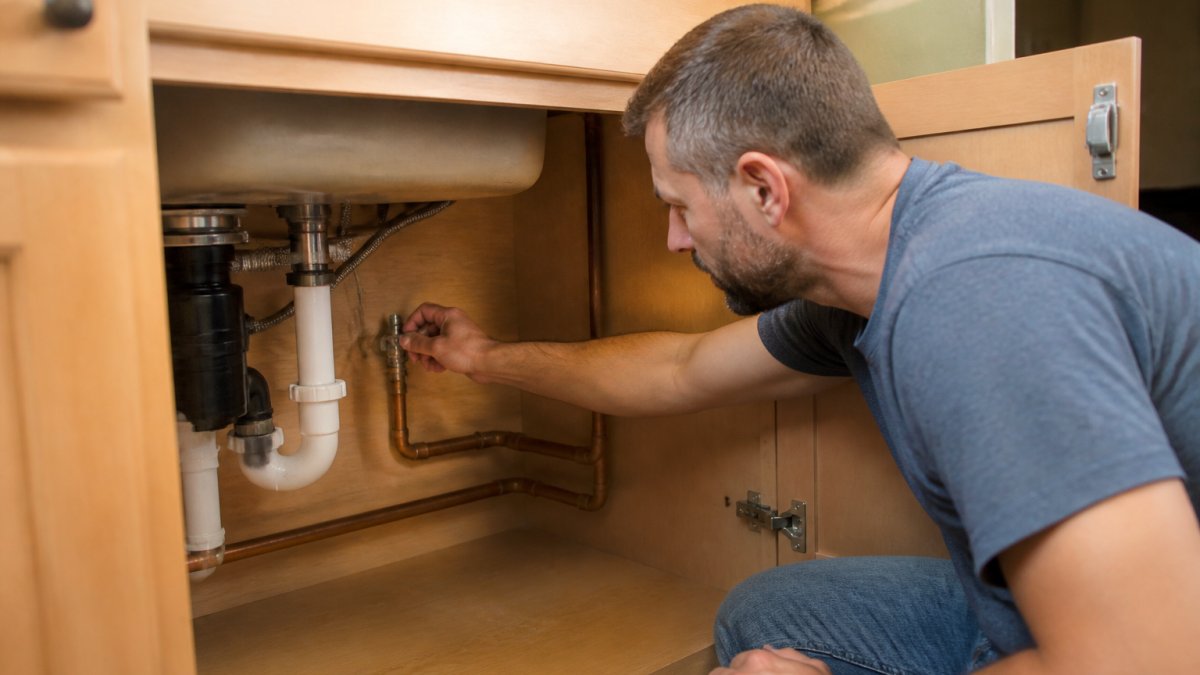
Homeowner turning off the main water valve under a kitchen sink during an emergency plumbing situation Step 1: Locate and Shut Off the Main Water-Supply Valve
Shutting off your main water supply stops new water from entering your home.
Your main shut-off valve is usually located where the water line enters your home. Check these common locations:
- Basement or crawl space near the foundation
- Garage near the wall facing the street
- Under the kitchen sink
- Outside the home in a valve box near the street
The valve handle may be a round knob or a lever. Turn a knob clockwise (right) to close it.
If you can’t find your main valve or it won’t turn, locate the water meter (usually outside) and look for a shut-off valve there.
Once you’ve shut off the main supply, water flow stops. This prevents additional flooding while you handle the immediate problem.
Step 2: Drain Remaining Water from Pipes
After closing the main valve, water remains inside your pipes. Draining this water prevents continued leaking and helps identify where the problem is.
Open the lowest faucets in your home (usually outdoor spigots or basement faucets). Let water run until it stops.
Flush toilets once to empty the tank, but don’t flush again if sewage is backing up.
This step takes just a few minutes but significantly reduces water loss while you address the emergency.
Step 3: Contain the Leak and Protect Your Property
Stop active water flow from spreading. Use towels, buckets, or a wet vacuum to contain water already on the floor.
Move valuables away from affected areas. Electronics, documents, and furniture should be relocated to dry spaces immediately.
Open windows and doors to improve air circulation. This helps prevent mold growth and reduces moisture in the air.
Place buckets under active leaks if water continues dripping. This prevents water from spreading across your floors and walls.
Step 4: Address Electrical and Safety Hazards
Standing water near electrical outlets, panels, or appliances creates shock hazards.
Do not enter areas with significant standing water near electrical equipment. Wait for professional help if the situation involves both water and electricity.
If gas odors accompany the water issue, leave your home immediately and call your gas utility. Gas leaks are serious safety threats.
Document the damage with photos and video before cleaning up. This protects your insurance claim and helps your emergency plumber assess the problem.
Water Leak Emergency: Problem-Specific Response
Different leaks demand different immediate responses. Knowing what you’re dealing with helps you act faster.
Burst Pipes and Major Leaks
A burst pipe creates visible water spraying or gushing from walls, ceilings, or pipes. This is the most destructive emergency plumbing scenario.
Immediate steps:
- Shut off the main water supply (as described above)
- Locate the burst section if visible
- Open faucets to drain remaining water
- Call an emergency plumber immediately
Burst pipes typically require replacement of the damaged section. This is not a DIY repair. Professional plumbers have the tools and expertise to locate the burst, cut out the damaged pipe, and install new sections properly.
While waiting for your emergency plumber, continue containing water with towels and buckets. Move furniture and valuables away from the affected area.
Overflowing Toilets and Drain Blockages
An overflowing toilet that won’t stop running needs immediate attention. This differs from a toilet that simply needs plunging.
If plunging doesn’t work:
- Locate the water shutoff valve behind or beneath the toilet
- Turn it clockwise to stop water flow
- If you can’t find or turn the toilet valve, shut off the main water supply
- Open the tank lid and lift the float to stop water flow
Do not continue flushing. Each flush adds more water to the overflow. Once you’ve stopped the water flow, call a professional plumber.
Drain blockages that cause backups in multiple fixtures indicate a more serious problem. This often means a clog in your main sewer line, not just a single drain. Call an emergency plumber rather than attempting to clear it yourself.
Sewer Backups and Sewage Issues
Sewage backing up into your home is a health emergency. Raw sewage contains dangerous bacteria and viruses (the CDC).
If you notice sewage backup:
- Stop using all plumbing fixtures immediately
- Shut off the main water supply
- Leave your home if the backup is extensive
- Call an emergency plumber and your local health department
Do not attempt to clear a main sewer line yourself. Professional equipment and expertise are required. Sewage exposure requires professional cleanup and disinfection after the line is cleared.
Emergency Water Heater Repair: When to Act Fast
Water heaters fail in ways that demand different responses. Some failures are emergencies; others can wait for regular service.
Signs Your Water Heater Needs Emergency Attention
A leaking water heater requires immediate action. Look for water pooling around the base or dripping from the tank.
Rust-colored water from your hot water taps suggests internal corrosion.
A water heater that’s leaking AND located above finished living spaces needs emergency attention. The water will damage ceilings and floors below.
Strange noises like banging or popping from the tank suggest pressure buildup. This can indicate a failing pressure relief valve or sediment buildup.
Immediate Steps for a Leaking or Failing Water Heater
If your water heater is leaking, shut off the water supply to the tank.
If there’s no shutoff valve on the tank line, shut off your main water supply.
Turn off the power or gas supply to the heater. For electric heaters, switch off the breaker.
Place buckets or a wet vacuum under the leak to contain water.
Call an emergency plumber. Water heater replacement or repair typically requires professional installation to ensure safe operation and proper connections.
Emergency Plumber vs. Regular Plumber: Know the Difference
Understanding when you need emergency service versus regular maintenance helps you respond appropriately and manage costs.
An emergency plumber responds to urgent problems outside normal business hours. Emergency plumbers handle burst pipes, major leaks, gas issues, and sewage backups.
A regular plumber works during standard business hours. They handle routine repairs, maintenance, drain cleaning, and fixture installation.
Emergency service typically costs more because plumbers are on-call and respond immediately.
Our team responds quickly to urgent situations and also handles scheduled maintenance to prevent emergencies from occurring.
Documentation and Insurance: Protecting Yourself After an Emergency
Your insurance claim depends on proper documentation. Taking photos and keeping records protects your coverage and helps your claim process smoothly.
Document immediately:
- Take photos of all water damage before cleanup
- Record video showing the extent of flooding
- Take close-ups of damaged materials and items
- Note the time you discovered the problem
- Keep receipts for any emergency repairs or supplies
Contact your insurance company:
- Call your homeowner’s insurance as soon as the emergency is contained
- Provide them with photos and documentation
- Ask about coverage for water damage and emergency repairs
- Keep records of all communication
Professional assessment:
- Get a written estimate from your emergency plumber
- Ask for documentation of what caused the emergency
- Request photos of the damaged area and repairs made
- Keep all invoices and receipts for insurance purposes
Many homeowner policies cover sudden, accidental water damage from burst pipes or equipment failure (Water Damage: Whats Covered; Whats Not). Gradual leaks or damage from lack of maintenance may not be covered. Your insurance adjuster will determine coverage based on the cause.
Prevention and Household Preparedness
Preventing emergencies saves money and stress. Simple preparation steps reduce your risk significantly.
Know your home:
- Locate your main water shutoff valve and practice turning it
- Know where your water meter is located
- Identify the location of your water heater
- Mark the locations of shut-off valves for individual fixtures
Regular maintenance prevents emergencies:
- Have your water heater inspected annually
- Drain sediment from your water heater yearly
- Check under sinks regularly for slow leaks
- Inspect exposed pipes for corrosion or damage
- Clean drains regularly to prevent backups
Winterization protects pipes:
- Insulate exposed pipes in unheated areas
- Disconnect outdoor hoses before freezing weather
- Open cabinet doors under sinks to allow warm air circulation
- Let faucets drip slightly during extreme cold
Create an emergency kit:
- Keep plungers accessible in bathrooms
- Have towels and buckets readily available
- Know your plumber’s phone number
- Keep your insurance policy information accessible
- Take photos of your home’s interior for insurance records
These preventive steps reduce the likelihood of emergencies. When problems do occur, you’ll be prepared to respond quickly and minimize damage.
Plumbing emergencies demand fast action, but knowing what qualifies as an emergency helps you respond appropriately.
When water is actively flooding, sewage is backing up, or safety hazards exist, don’t wait. Contact an emergency plumber immediately.
Frequently Asked Questions
What counts as emergency plumbing?
Emergency plumbing includes burst pipes, major water leaks that cause flooding, overflowing toilets that won’t stop, sewer backups, water heater ruptures, and any situation where water damage is occurring or standing water poses a safety risk. These problems require immediate professional help to prevent property damage and protect your home’s structural integrity. Non-emergency issues like a slow drip from a faucet or a clogged drain that isn’t backing up can typically wait for a regular appointment.
Should I shut off the water during a plumbing emergency?
Yes. Shutting off the main water-supply valve immediately stops water flow and prevents further flooding and property damage. Locate your main valve (usually near the water meter or where the water line enters your home), turn it clockwise to close it, then open the lowest faucet in your house to drain remaining water from the pipes. This single action can save thousands of dollars in water damage and is the first step in any plumbing emergency response.
How do I choose between an emergency and regular plumber?
Call an emergency plumber if water is actively leaking, flooding is occurring, pipes have burst, or your water heater is failing. Emergency plumbers are available 24/7 and prioritize life-safety and damage prevention. Regular plumbers handle scheduled repairs like faucet replacements or routine drain cleaning. Emergency plumbers typically charge higher rates for after-hours service, but the cost is justified when immediate action prevents catastrophic water damage to your home or business.
Is a leaking water heater an emergency?
A leaking water heater can become an emergency depending on the severity. A small drip may be repairable, but if water is pooling around the base or spraying from the tank, shut off the water supply and gas utility immediately, then call an emergency plumber. A failing water heater can rupture completely, causing sudden flooding. If your water heater is 10-15 years old and showing signs of leakage, consider replacement before it fails to avoid emergency situations.
CALL 727-475-1474 and 813-579-1920


CFC 1427929
Serving Pasco County 25+ Years
info@purplumbing.com
What Qualifies as Emergency Plumbing: A Homeowner’s Guide
October 11, 2026 | Blog
- Reageer
For more information or to request an appointment dial 727-475-1474 and 813-579-1920
Serving Pasco County 25+ Years, info@purplumbing.com
Carrollwood
Clearwater
Dunedin
Holiday
Land O Lakes
Lutz
New Port Richey
Oldsmar
Palm Harbor
Plant City
Saint Petersburg
Tampa
Tarpon Springs
Temple Terrace
Town N Country
Trinity
West Chase
Site Designed by GoProLocal