Table of Contents
- What an Anode Rod Does and Why It Fails
- Signs Your Anode Rod Needs Replacement
- Types of Anode Rods: Magnesium vs Aluminum
- Tools Needed for Anode Rod Replacement
- Step-by-Step Anode Rod Replacement
- How Often Should I Change Out the Anode Rod?
- Low-Clearance and Powered Anode Options
- Frequently Asked Questions
Last Updated: October 1, 2026
What an Anode Rod Does and Why It Fails
A water heater anode rod is a sacrificial metal core that corrodes before your tank does. This guide from PUR Plumbing explains how it works, how to tell when it’s spent, and how to swap it out yourself.
How Sacrificial Anodes Stop Tank Corrosion
The process is called galvanic action. When two different metals sit in the same water, the more reactive one corrodes first. That’s electrolysis at work, and it’s the same principle behind rust prevention on ships and pipelines.
Two things wear a rod down:
- Water hardness. Hard water speeds up the reaction.
- Sediment buildup. Trapped minerals at the bottom eat into the rod faster.
Signs Your Anode Rod Needs Replacement
The clearest sign is a rotten-egg smell in your hot water. Sulfate-reducing bacteria react with the magnesium rod and produce hydrogen sulfide gas. Cold water smells fine, hot water doesn’t.
Other warning signs:
- Rusty or metallic-tasting hot water
- Popping or rumbling sounds from sediment
- A rod that’s under 1/2 inch thick at the core wire
- Visible pitting or a bare steel wire with no magnesium left
Watch Out
If your tank is already leaking from the bottom or the shell, the rod won’t save it. Corrosion has moved past the anode stage, and replacement is the only fix.Types of Anode Rods: Magnesium vs Aluminum
Rod material is not a preference, it is a match to your water chemistry. Pick wrong and you either burn through rods every couple of years or trade corrosion protection for a rotten-egg smell. The three common sacrificial materials behave differently, and the right choice depends on hardness, sulfur, and how the tank is lined.
Magnesium: The Default for Soft Water
Magnesium is the most reactive of the common rod metals, which is why it is the factory default on most residential tanks. That high reactivity is the point: it gives up its metal faster than the steel tank wall, so the tank stays intact. In soft water (roughly under 7 grains per gallon of hardness), a magnesium rod commonly lasts three to five years.
Aluminum: Better in Hard Water, Weaker in Soft
Aluminum rods are less reactive than magnesium. In hard water, where mineral scale already slows the galvanic reaction, that lower reactivity is an advantage, the rod lasts longer and costs less. Aluminum also does not feed sulfur bacteria the way magnesium does, so it is a reasonable first swap if odor is your problem.
Zinc: An Aluminum Rod With an Odor Fix
Zinc rods are aluminum rods with a zinc core added specifically to suppress sulfur odor. They are not a separate metal category so much as a targeted variant. If you have already tried aluminum and still get the smell, zinc is the next step. Expect to pay more and to hunt for stock, many big-box stores do not carry them, so a plumbing supplier is often the faster source.
Rod Type Best For Main Drawback Magnesium Soft water, standard steel tanks Sulfur smell in some homes Aluminum Hard water, odor issues Shorter life in soft water Zinc Persistent sulfur odor Costs more, harder to find Matching the Rod to Your Water
A few practical rules cut through the guesswork:
- Hard water (high mineral content). Aluminum or a powered rod. Magnesium depletes quickly under scale.
- Soft water, no odor. Magnesium. It is the standard for a reason.
- Well water with sulfur. Aluminum first, zinc if the smell persists. Magnesium will make it worse.
- Tank with a glass or porcelain lining. Match the rod to the lining manufacturer’s spec; some linings pair poorly with certain sacrificial metals.
If you are on well water, a basic water test, hardness, iron, sulfur, tells you more about rod life than any general rule. Homes on high-mineral well water routinely burn through rods in half the time of homes on treated municipal water.
Pro Tip
Not sure which rod fits? Pull the old one and note its material and how much core wire is exposed. That wear pattern, plus a water test, points to the right replacement.Disposing of the Old Rod
Do not toss a spent rod in the trash. It is scrap metal, and most municipal recycling centers and many plumbing suppliers accept it. A corroded rod is also a useful diagnostic, bring it to the counter when you buy the replacement and a supplier can often confirm whether you chose the right material.
Tools Needed for Anode Rod Replacement
Gather these plumbing tools before you start:
- 1-1/16 inch socket wrench or a breaker bar
- Pipe dope or thread sealant
- Thread tape
- A garden hose and a bucket
- A helper for tight spaces
A breaker bar helps when the hex head is stuck. Factory-tight rods often need extra use. A wrench extension can help in tight spots, and a flexible anode rod solves low-clearance problems.
Step-by-Step Anode Rod Replacement
Plan for about an hour. The job is simple if you take it slow and shut off the right valves first.

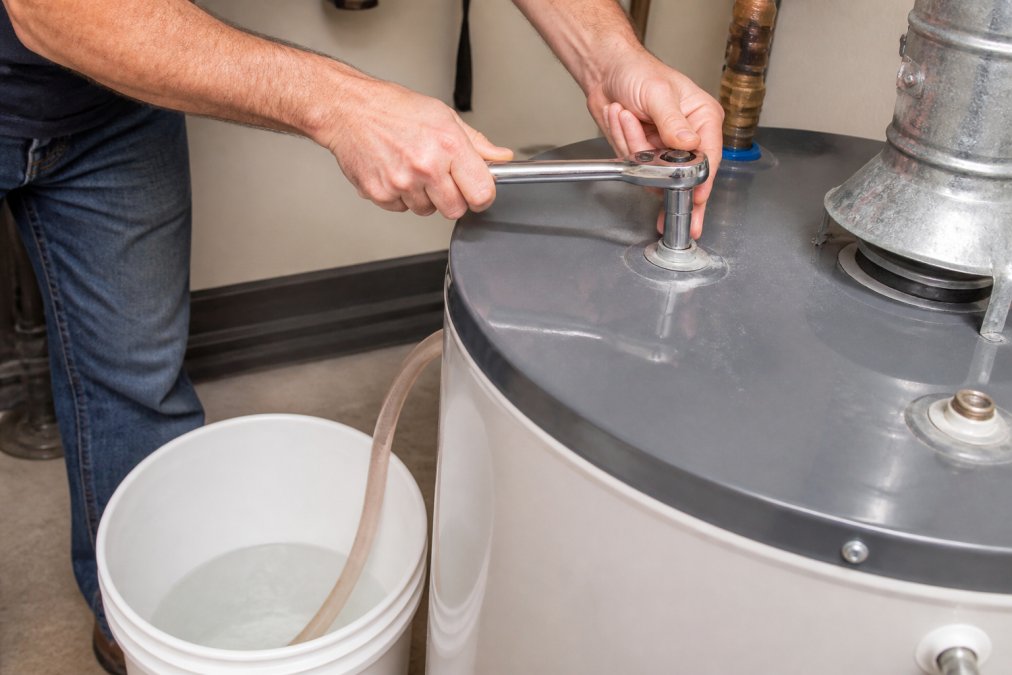
Homeowner using a socket wrench to loosen an anode rod for replacement on a residential water heater unit Draining the Tank and Locating the Rod
- Shut off the water supply and the gas or power.
- Close the water supply shut-off valve.
- Attach a hose to the drain valve and run it outside or to a floor drain.
- Open a hot water tap upstairs to break the vacuum.
- Drain about a quarter of the tank, enough to drop the water below the rod.
The anode rod sits under a hex head on top of the tank. On most units it’s a 1-1/16 inch nut. If you have a two-piece dip tube, the rod may be under it.
Removing the Old Rod and Installing the New One
- Fit your socket on the hex head and turn counterclockwise.
- If it won’t budge, use the breaker bar. Don’t force it and crack the tank.
- Pull the rod straight up. It may come out in pieces if it’s badly depleted.
- Wrap the new rod’s threads with thread tape, then coat with pipe dope.
- Thread the new rod in by hand, then snug it with the wrench. Don’t overtighten.
- Close the drain valve, reopen the water supply, and let the tank refill.
- Restore power or gas once the tank is full.
Pro Tip
Flush the tank while it’s drained. Sediment at the bottom shortens the life of the new rod and cuts tank longevity.How Often Should I Change Out the Anode Rod?
Check it every year and replace it when the core wire shows. In most homes that means every 3 to 5 years. Hard water shortens that window, so check more often if your water is mineral-heavy.
Low-Clearance and Powered Anode Options
Most guides assume you can stand a four-foot rod straight up and pull it out. Plenty of heaters sit in closets, under stairs, or in basements with a low joist overhead, and a solid rod simply will not clear. This is the problem generic instructions skip, and it has two real solutions.
Solving the Low-Ceiling Problem
A standard anode rod is one rigid piece, typically three to five feet long depending on tank height. If the ceiling above the heater is lower than the rod is long, you cannot lift it free.
How a Powered Rod Actually Works
A powered anode is a titanium or mixed-metal-oxide rod connected to a control module that plugs into a standard outlet. The module sends a small DC current through the rod and into the water. That current shifts the electrochemical balance so the steel tank stays cathodic, protected, rather than corroding. Because the rod itself is not the sacrificial material, it does not wear away the way a magnesium rod does.
What that means in practice:
- Service life. A powered rod commonly runs a decade or more, versus three to five years for a sacrificial rod in average water.
- No odor. Because there is no magnesium reacting with sulfur bacteria, powered rods typically eliminate the rotten-egg problem entirely.
- No low-clearance fight. There is no long rod to extract, so ceiling height stops mattering.
- Upfront cost. A powered rod and its power supply cost meaningfully more than a sacrificial rod, and you need a nearby outlet.
When the Switch Pays Off
A powered rod is worth considering if any of these apply:
- Your heater sits in a space too tight to pull a standard rod.
- You are on well water with sulfur and have already fought the odor.
- You are tired of replacing a sacrificial rod every few years.
- You want to stop thinking about the rod between annual checks.
Watch Out
A powered anode rod requires a working outlet and a control module wired per the manufacturer’s instructions. If you are not comfortable with the electrical side, have a licensed plumber or electrician handle the install.A Note on Water Quality
Whichever route you take, your water drives the decision. Homes on high-mineral well water deplete sacrificial rods faster than homes on treated municipal water, and sulfur content determines whether magnesium is even an option. If you are unsure what your water contains, a basic hardness and sulfur test is the cheapest step you can take before buying a rod.
Frequently Asked Questions
How do I figure out what anode rod I need for my water heater?
First, check your water heater’s manufacturer label for the model number, then look up the OEM replacement rod spec. Most residential tanks use a 3/4-inch hex head with either a 44-inch or 52-inch rod. Match the rod material to your water chemistry: magnesium for soft water, aluminum for hard water, zinc-aluminum for sulfur odor issues. If you have low ceiling clearance, a flexible segmented rod lets you install without removing the tank.
Can I replace an anode rod without draining the entire tank?
You can, but draining is safer. Closing the cold water supply and opening a hot water faucet relieves pressure, but the tank still holds water that can spill when you pull the rod. Draining 5 to 10 gallons into a bucket through the drain valve reduces the mess and makes rod removal easier. If the tank is older and the drain valve is clogged with sediment, drain from the top instead by loosening the rod slowly.
How much does a plumber charge to change an anode rod?
Pricing depends on tank access, rod type, and whether the old rod is seized. A licensed plumber factors in labor, the replacement rod, and any related parts like thread sealant or a new drain valve. For an accurate quote on your specific water heater, contact PUR Plumbing directly. They serve Pasco County with over 25 years of experience and can assess your setup before quoting.
What are the signs that my water heater anode rod needs replacing?
Watch for rusty or metallic-tasting hot water, a sulfur or rotten-egg smell, popping or rumbling sounds from sediment buildup, and visible rust around the tank fittings. On a tank over five years old, pulling the rod and inspecting it is the only way to confirm depletion. If the rod is coated in white calcium or down to the thin steel core wire, it is spent and should be replaced before the tank itself corrodes.
A failing anode rod is easy to ignore until the tank starts leaking. If you’d rather not crawl into a tight closet with a breaker bar, PUR Plumbing can handle the whole job for you. We offer water heater installation, tankless water heater options, and full water heater maintenance, all backed by 25+ years serving Pasco County. Contact PUR Plumbing to schedule your anode rod replacement or water heater service today.
CALL 727-475-1474 and 813-579-1920


CFC 1427929
Serving Pasco County 25+ Years
info@purplumbing.com
Water Heater Anode Rod Replacement Guide
October 2, 2026 | Blog
- Reageer
For more information or to request an appointment dial 727-475-1474 and 813-579-1920
Serving Pasco County 25+ Years, info@purplumbing.com
Carrollwood
Clearwater
Dunedin
Holiday
Land O Lakes
Lutz
New Port Richey
Oldsmar
Palm Harbor
Plant City
Saint Petersburg
Tampa
Tarpon Springs
Temple Terrace
Town N Country
Trinity
West Chase
Site Designed by GoProLocal