Table of Contents
- Why Older Homes Get Slow Drains
- Natural Drain Cleaning Methods That Work
- How to Use a Plumbing Snake Safely
- Signs of Main Sewer Line Blockage
- Tools for Clearing Old Pipe Blockages
- When to Call a Professional Plumber
- Preventative Maintenance for Old Plumbing
- Frequently Asked Questions
Last Updated: September 29, 2026
Why Older Homes Get Slow Drains
If you live in an older home, you already know the frustration of watching water pool in the sink. Learning how to fix slow drains in older homes starts with understanding that old plumbing was built for a different era. At PUR Plumbing, we’ve cleared many of these clogs across Pasco County, and the culprit is rarely just “hair in the pipe.”
Pipe Materials That Cause Problems
The material of your pipes tells you a lot about what’s slowing things down.
- Cast iron pipes rust from the inside out. Over decades, rust flakes build up and narrow the pipe opening.
- Galvanized steel corrodes and creates rough spots where debris catches.
- Clay sewer laterals crack and let tree roots push through joints.
- Lead pipes, common in pre-1950s homes, sag and collect sediment over time.
Common Causes of Slow Drains
Several issues show up again and again in aging plumbing:
- Pipe scale from mineral deposits that harden over years
- Hair and soap scum caught on rough, corroded surfaces
- Root intrusion in underground sewer lines
- Failing drum traps that collect debris in hard-to-reach spots
- Vent pipe blockages that stop proper airflow
Key Takeaway
If multiple drains are slow at once, the problem is likely in your main sewer line or vent pipe, not the individual fixture.Natural Drain Cleaning Methods That Work
Natural drain cleaning methods are a safe first step for minor clogs and routine maintenance, but “natural” is not the same as “safe for every old pipe.” In a home with cast iron, galvanized steel, or clay laterals, the method matters as much as the ingredients. Here is how to match the approach to what is actually under your floor.
Baking Soda and Vinegar
This classic combo works on light grease and organic buildup:
- Pour half a cup of baking soda down the drain.
- Follow with half a cup of white vinegar.
- Cover the drain and wait 15 minutes.
- Flush with hot water.
Hot Water and Dish Soap
For greasy kitchen drains, hot water and dish soap can help:
- Heat a pot of water until nearly boiling.
- Add a squirt of dish soap.
- Pour slowly down the drain in stages.
- Skip it on older PVC with glued joints. Very hot water can soften solvent-welded connections over time.
- Skip it on lead or clay. Lead pipes sag and deform with repeated heat cycles, and clay can crack from thermal shock.
What Actually Works on Each Old Pipe Material
Pipe material Safe natural method Method to avoid Cast iron Baking soda + vinegar, enzyme drain cleaner Boiling water (accelerates rust flaking) Galvanized steel Enzyme drain cleaner, warm soapy water Boiling water, abrasive fizzing Clay lateral Enzyme drain cleaner only Any hot water, any acid Lead Enzyme drain cleaner, professional evaluation Hot water, chemicals, snaking Older PVC Baking soda + vinegar, warm water Near-boiling water Enzyme drain cleaners are the unsung option here. They use bacteria and enzymes to digest organic buildup rather than dissolving it with heat or acid, which makes them the only category that is broadly safe across every material listed above. They work slowly, often over several hours or overnight, so they suit maintenance rather than emergency clogs.
Watch Out
Never use chemical drain cleaners with hydrochloric acid or lye in older homes. These products generate heat that can crack cast iron and galvanized steel, and in lead or clay they can cause a full pipe failure. The same warning applies to any “natural” recipe that calls for boiling water in a lead or clay system.Key Takeaway
If a natural method has not moved the water after two attempts, stop. Repeated flushing on a drain that is fully blocked just adds standing water above a clog that needs mechanical removal.How to Use a Plumbing Snake Safely
A plumbing snake is the best tool for reaching clogs that sit past the trap. Learning how to use a plumbing snake safely protects both your pipes and your floors.

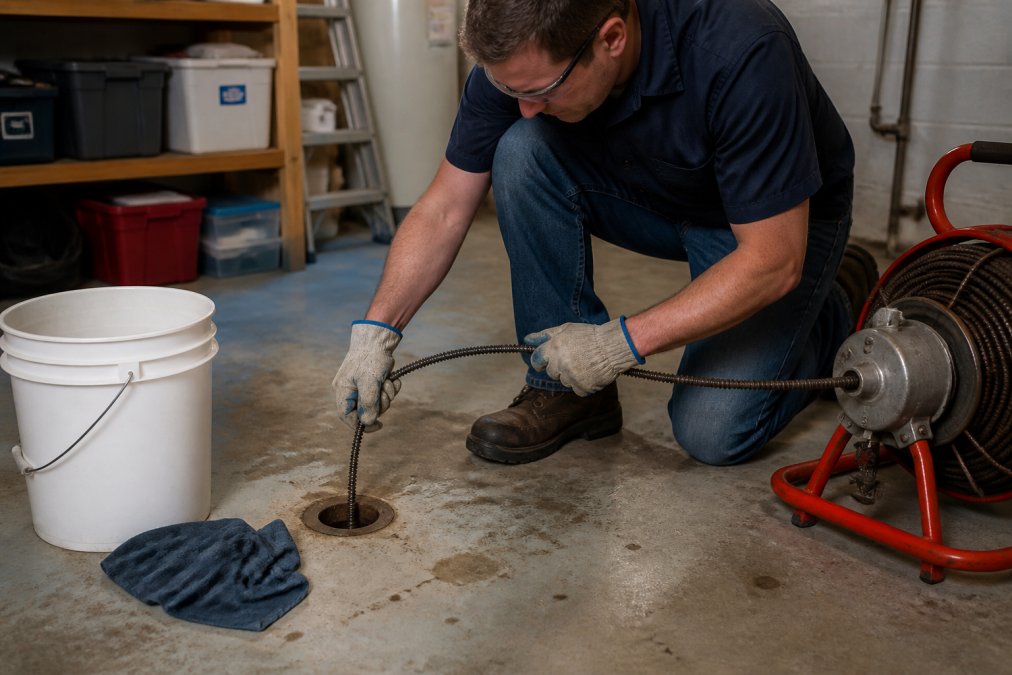
Person wearing gloves feeding a manual drain snake into a floor drain to fix slow drains in a utility room Follow these steps:
- Place a bucket under the drain to catch water.
- Remove the drain cover or P-trap if accessible.
- Feed the snake cable in slowly by hand.
- Crank clockwise when you feel resistance.
- Pull the cable back once the clog breaks.
- Flush with hot water to clear the rest.
Manual vs. Mechanical Auger
A manual snake works for clogs within about 25 feet of the drain. A mechanical auger, sometimes called a drum auger, handles longer runs and tougher blockages.
- Manual snake: Best for sinks, tubs, and short runs. Cheap and easy to store.
- Mechanical auger: Best for main sewer lines and stubborn clogs. Heavier and costs more.
Signs of Main Sewer Line Blockage
Signs of main sewer line blockage go beyond one slow drain. Watch for these red flags:
- Multiple drains backing up at once
- Sewage smell in the basement or yard
- Gurgling sounds from toilets and tubs
- Water pooling around the floor drain
- Slow drains in every fixture after heavy water use
Tools for Clearing Old Pipe Blockages
The right tools make the job easier and safer on fragile pipes. The wrong tool, used at the wrong pressure, is how a slow drain becomes a flooded basement. In homes 50 to 100 years old, the tool choice should be driven by pipe material first and clog location second.
Tool Best For Watch Out For Manual drain snake Sinks, tubs, short runs Kinks in the cable; can scratch soft lead Mechanical auger Main lines, tough clogs Damaging old pipe walls; use low speed Hair removal tool Bathroom drains Only reaches the trap Hydro jetting Grease and scale buildup Requires a pro; can crack clay and lead Camera inspection Finding root intrusion Needs professional gear Enzyme drain cleaner Maintenance on any material Too slow for a full blockage Matching the Tool to the Pipe Material
This is the part most guides leave out, and it is the part that prevents expensive damage:
- Cast iron: A manual snake or low-speed mechanical auger is the safe choice. Cast iron that has been in service for decades is often thinner at the bottom of the pipe from years of corrosion. A cable spun at high speed can punch through that thin wall. Feed the cable slowly and let the tip do the work.
- Galvanized steel: Similar to cast iron, but the interior is rougher, so the snake tends to grab and stall. Use a smaller-diameter cable and expect to make several passes rather than one aggressive push.
- Clay sewer laterals: These are the most fragile. Clay cracks easily, and a cracked joint is an open invitation for tree roots. Mechanical snaking is generally acceptable, but hydro jetting at high pressure is not, it can blow out a joint that was already failing.
- Lead: Do not snake lead at all if you can avoid it. Lead is soft and deforms under a cable. If a lead drain is slow, the correct move is a professional evaluation, not a DIY tool.
Why Hydro Jetting Is Not a DIY Tool in Old Homes
Hydro jetting uses water at high pressure to scour grease, scale, and roots off pipe walls. On modern PVC or sound cast iron, it is the most thorough cleaning method available. On old clay or lead, the same pressure that removes buildup can remove pipe. Most practitioners will not jet a clay lateral without a camera inspection first, precisely because the pipe may already be cracked and the jetting is what turns a crack into a collapse.
The Camera Inspection Rule
If a clog returns within a few weeks, or if you have already snaked the same line twice, stop buying tools and get a camera inspection. A camera tells you whether you are fighting a clog or a failing pipe, and those two problems have completely different solutions. A camera inspection also documents the condition of the line, which is useful if you ever sell the home or file an insurance claim after a backup.
Pro Tip
Mark your calendar for a yearly drain check if your home was built before 1970. Catching pipe scale early costs far less than replacing a collapsed sewer lateral. If you are not sure what material your pipes are, a magnet is a quick test: cast iron and galvanized steel are magnetic, clay, lead, and PVC are not.Watch Out
Never run a mechanical auger at full speed in a home older than 1970 without first confirming the pipe material. High-torque tools can crack clay, crush lead, and punch through thinned cast iron. When in doubt, start with a manual snake and work up.When to Call a Professional Plumber
Call a professional plumber when the clog returns, when multiple fixtures back up, or when you smell sewage. These signs point to problems a hand snake can’t fix.
Here’s when to stop DIY and make the call:
- The same drain clogs within a few weeks
- Water backs up in more than one fixture
- You hear gurgling from other drains
- The pipe feels soft, cracked, or corroded
- You’ve tried a snake and the clog won’t budge
Preventative Maintenance for Old Plumbing
Preventative maintenance keeps old pipes working longer and reduces surprise backups.
- Run hot water for 30 seconds after each kitchen sink use
- Use drain screens in every tub and shower
- Skip flushable wipes, even the “flushable” kind
- Pour a baking soda and vinegar mix monthly
- Schedule a professional plumbing inspection every 1-2 years
- Keep trees at least 10 feet from sewer lines
- Watch for new gurgling or slow drainage
Frequently Asked Questions
What do plumbers recommend for slow drains in older homes?
Plumbers recommend starting with mechanical methods like a drain snake or plunger before trying chemicals. For older homes with cast iron or galvanized steel pipes, harsh chemicals can accelerate corrosion. A professional plumbing inspection with camera equipment can identify whether the issue is a simple clog or pipe scale buildup. Regular maintenance, including enzyme treatments and avoiding grease, helps prevent recurring slow drains.
Are slow drains in an old house a sign of a main sewer line issue?
Multiple slow drains throughout the home often point to a main sewer line blockage rather than individual clogs. Watch for gurgling sounds from other fixtures when you run water, sewage odors, or water backing up in the basement. These signs of main sewer line blockage warrant a professional camera inspection. Root intrusion and pipe corrosion are common culprits in older sewer laterals.
How can I naturally fix a slow drain without harsh chemicals?
Natural drain cleaning methods include pouring a half cup of baking soda followed by a half cup of vinegar down the drain, waiting 15 minutes, then flushing with hot water. A mixture of hot water and dish soap also breaks down grease. For hair clogs, a hair removal tool or manual drain snake works well. These methods are safer for old pipes and the environment.
What is the best way to clear a clog in cast iron pipes?
Cast iron pipes require gentle handling because they become brittle with age. Use a manual drain snake or mechanical auger rather than chemical drain cleaners, which can damage the pipe interior. Hydro jetting by a professional plumber is effective for severe buildup but should be done carefully in old cast iron. Regular enzyme treatments help maintain pipe integrity without abrasive action.
Aging pipes will eventually need professional attention, no matter how careful you are. When slow drains turn into recurring backups, PUR Plumbing is ready to help. We offer drain cleaning, camera inspections, hydro jetting, and full sewer line repairs. Our licensed team serves homeowners and businesses with timely, affordable service and quick response to emergencies. Contact PUR Plumbing today and get your drains flowing like they should.
CALL 727-475-1474 and 813-579-1920


CFC 1427929
Serving Pasco County 25+ Years
info@purplumbing.com
How to Fix Slow Drains in Older Homes: 2026 Guide
September 30, 2026 | Blog
- Reageer
For more information or to request an appointment dial 727-475-1474 and 813-579-1920
Serving Pasco County 25+ Years, info@purplumbing.com
Carrollwood
Clearwater
Dunedin
Holiday
Land O Lakes
Lutz
New Port Richey
Oldsmar
Palm Harbor
Plant City
Saint Petersburg
Tampa
Tarpon Springs
Temple Terrace
Town N Country
Trinity
West Chase
Site Designed by GoProLocal