Table of Contents
- Understanding Gas Line Installation Cost
- Cost to Install Gas Line for Stove and Other Appliances
- Gas Line Installation Cost Per Foot
- Factors That Affect Your Total Installation Price
- Gas Line Permit and Inspection Cost
- Gas Line Installation Time and Labor Costs
- How to Get an Accurate Installation Quote
- Frequently Asked Questions
Last Updated: October 8, 2026
Understanding Gas Line Installation Cost
Gas line installation cost depends on factors that vary significantly from one project to another. At PUR Plumbing, we’ve helped homeowners and businesses understand what drives these expenses.
The cost to install a gas line ranges based on project scope, line length, location, and local requirements. A simple appliance hookup costs far less than running a main gas line through your property. Indoor versus outdoor installation, excavation requirements, permit fees, and local code compliance all affect your final bill.
Pro Tip
When comparing quotes from different contractors, ask specifically what’s included in each estimate. Labor, materials, permits, and inspections should all be itemized separately so you can see where your money goes.Cost to Install Gas Line for Stove and Other Appliances
The cost to install a gas line for specific appliances varies by appliance type and connection complexity.
For a gas stove, installation focuses on connecting to an existing main gas line or running a new branch line from the nearest supply point, generally straightforward when the kitchen sits close to existing gas infrastructure.
Other common appliances requiring gas line installation include:
- Water heaters (especially tankless models requiring dedicated lines)
- Clothes dryers
- Fireplaces and fire pits
- Grills and outdoor cooking equipment
- Heating systems and furnaces
Each appliance has different pressure and volume requirements, a water heater needs a different pipe diameter than a stove, so your contractor must size the line correctly for safety compliance.
Key Takeaway
The cost to install a gas line for an appliance depends primarily on how far it must run and whether you’re connecting to existing infrastructure or building from scratch. Shorter connections always cost less than longer runs.Gas Line Installation Cost Per Foot
Per-foot pricing is the most useful number for comparing gas line quotes, but also the most misused. A per-foot rate only means something when tied to a defined scope: pipe material, diameter, installation method, and whether the run is exposed, concealed, or buried. Two contractors can quote the same “per foot” number and deliver wildly different work. Separate per-foot pricing into three layers:

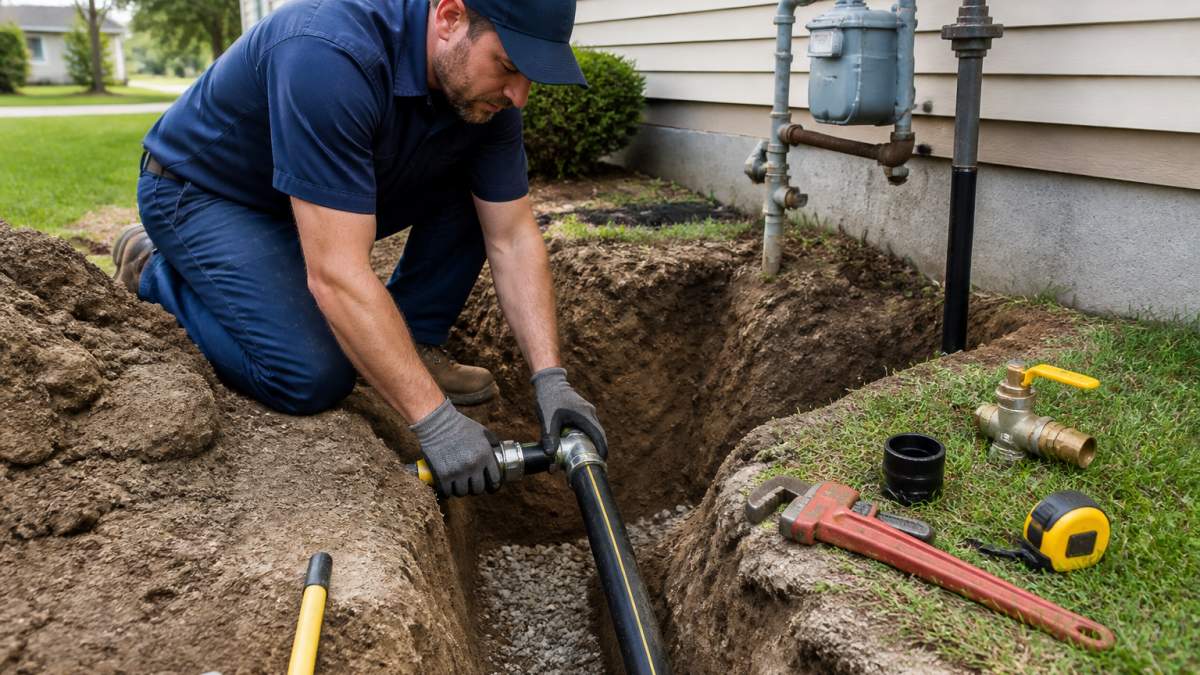
Infographic illustrating the factors influencing gas line installation cost per foot for residential excavation - Material cost per foot, the pipe, fittings, valves, and sealant consumed by the run.
- Labor cost per foot, the time to cut, fit, pressure-test, and secure each segment.
- Condition cost per foot, the premium added for trenching, concrete cutting, crawl space work, or routing through finished walls.
Material and labor scale predictably with length; condition cost does not, it is driven by what the run passes through, not how long it is.
A per-foot framework you can actually use
Rather than quote a single national number, build an estimate by condition tier. Residential gas piping falls into four tiers:
- Exposed interior run, pipe secured along an unfinished basement ceiling, garage wall, or utility chase. Lowest labor per foot because access is open and no restoration is required.
- Concealed interior run, pipe fished through finished walls, soffits, or a crawl space. Labor rises because the installer works in tight spaces and may need to open and patch drywall.
- Above-ground exterior run, pipe run along an exterior wall in protective conduit or with proper supports. Moderate labor, plus weatherproofing and support hardware.
- Buried exterior run, pipe trenched below grade at the depth your local code requires, typically in the 12-to-36-inch range, with bedding, backfill, and surface restoration. Highest condition cost per foot.
Within each tier, larger-diameter pipe costs more per foot in material but may be required to carry the appliance load.
Worked length examples
Use these as planning illustrations, not quotes. Actual numbers depend on your market, code cycle, and site.
- Short appliance branch (under 15 feet, exposed): dominated by the minimum service call and connection labor rather than per-foot material. The per-foot rate looks high because fixed costs are spread over very few feet.
- Mid-length interior run (30-60 feet, partially concealed): per-foot cost is at its most stable here, enough length to amortize setup, but not enough to trigger major condition premiums.
- Long buried run (75-150 feet, trenched): per-foot cost is driven by excavation, bedding, and restoration. Ask whether the quote includes sod replacement, concrete patching, or driveway repair.
- Concrete crossing (any length): a single slab penetration can add more to the job than dozens of feet of open run. Confirm whether the contractor cores, saw-cuts, or routes around.
What to demand in a per-foot quote
A defensible per-foot quote states the pipe material and diameter, the installation tier, the linear footage from supply point to appliance connection, and what is excluded (permits, inspections, restoration, appliance connection kit).
Key Takeaway
Per-foot pricing is only comparable when the material, diameter, and installation tier are identical. Ask every contractor to quote the same tier and material so the numbers line up.Factors That Affect Your Total Installation Price
Most cost guides list the same variables, length, indoor versus outdoor, excavation, and stop there.
The six cost components
Every gas line quote, whether itemized or blended, is built from these pieces. Ask your contractor to break the bid down this way.
- Pipe and fittings. The pipe itself, plus elbows, tees, couplings, valves, and the appliance connector. Rigid black steel is typically least expensive per foot but slower to install; copper and CSST cost more in material but can reduce labor in routed or concealed paths. Fittings are a small share of material cost on long runs and a large share on short, connection-heavy jobs.
- Labor. The dominant line item on most residential jobs, scaling with run length, access difficulty, and the number of connections and pressure tests required. A run with many turns takes longer than a straight run of the same length.
- Permits and inspections. Set by your local building department, not the contractor. Fees are usually flat per permit, and some jurisdictions charge separately for rough-in and final inspections. Confirm who pulls the permit, it should be the licensed contractor, not you.
- Excavation and trenching. Applies to buried runs. Cost is driven by trench length, required depth, soil type, and whether the path crosses concrete, landscaping, or existing utilities. Hand-digging near marked utilities is slower and costlier than open trenching.
- Restoration. Backfill, compaction, sod or seed, concrete patching, and driveway repair. This is the line item most often omitted from a verbal estimate and most often added as a change order. Get it in writing.
- Testing and commissioning. Pressure testing, leak detection, purging, and lighting the appliance. Some contractors fold this into labor; others bill it separately. Either way, it should be named in the quote.
The technical factor most guides miss: pipe sizing
Gas pipe is sized by diameter, determined by two things: the total BTU demand of everything the line serves, and the distance from the meter or supply point to the farthest appliance.
This is why a quote for “a gas line to the range” is not comparable to one for “a gas line to a tankless water heater.” A tankless unit can draw far more BTU, which may push the run up a pipe size, changing material cost, fittings, and even whether the existing meter can support the added load.
How the components interact
The components are not independent. A longer run increases pipe, labor, and often diameter. A buried run adds excavation and restoration. A concealed interior run trades excavation cost for drywall repair.
What to ask before you sign
- What pipe material and diameter are you pricing, and how did you size it?
- Is the permit and inspection fee included, and who pulls the permit?
- Does the quote include restoration of anything you open or dig?
- Is pressure testing and appliance commissioning included?
- What is excluded, and what would trigger a change order?
Watch Out
Never attempt to locate underground utilities by digging. Always call your local utility locating service before any excavation work. Hitting a gas line or electrical line creates serious safety hazards and expensive repairs.Pro Tip
When comparing quotes, line up the six components side by side. A lower total usually means something was excluded, most often restoration, testing, or the permit fee, rather than a genuinely better price.Gas Line Permit and Inspection Cost
Gas line permit and inspection requirements vary by jurisdiction but are mandatory for all gas line work. Most areas require permits before installation begins, ensuring the work meets current codes and safety standards, and permit costs vary widely by location and project scope.
Factors affecting permit and inspection costs:
- Local jurisdiction fees (set by your municipality)
- Inspection complexity based on project scope
- Number of inspections required (some projects need multiple)
- Rush or expedited processing fees if available
Building departments typically charge flat fees rather than percentage-based rates. Ask your contractor what permits apply to your project and what fees to expect. PUR Plumbing handles permit coordination for our customers, ensuring all requirements are met before work begins.
Gas Line Installation Time and Labor Costs
Labor costs represent a significant portion of your total installation price, covering the plumber’s expertise, time, and project complexity. Installation time varies dramatically by scope: a simple appliance hookup might take a few hours, while a complete service lateral could require multiple days.
Labor factors include:
- Plumber experience and licensing level
- Project complexity and routing challenges
- Site conditions and accessibility
- Permit and inspection coordination
- Travel time and job site setup
Licensed plumbers charge based on experience, local market rates, and business overhead, and emergency or after-hours installations typically cost more. Most contractors provide time estimates during the quote process, understand whether those include permit coordination and inspections or just installation labor.
How to Get an Accurate Installation Quote
Getting an accurate gas line installation quote requires providing contractors with specific project information, vague descriptions lead to inaccurate estimates. When contacting contractors, provide these details:
- Type of appliance or application (stove, water heater, dryer, etc.)
- Current gas line location or distance to nearest supply
- Approximate distance the line must run
- Whether installation is indoor, outdoor, or both
- Any known obstacles or difficult terrain
- Your timeline and preferred installation date
Request itemized quotes that break down materials, labor, permits, and inspections separately, so you can compare quotes accurately.
Ask contractors these questions:
- Are permits and inspections included in the quote?
- What happens if conditions differ from initial estimates?
- Do you carry liability insurance and licensing verification?
- What warranty or guarantee covers your work?
- Can you provide references from recent gas line installations?
Comparing multiple quotes helps you understand market rates and spot unusual pricing, but the lowest quote isn’t always the best choice.
Pro Tip
Request quotes from at least three contractors before deciding. This gives you a realistic range and helps you spot outliers. Avoid contractors who won’t provide itemized quotes or seem reluctant to discuss specific costs.Getting a gas line installation quote requires understanding what drives costs and what questions to ask.
At PUR Plumbing, we’ve installed gas lines for Pasco County homeowners and businesses.
Ready to understand your gas line installation costs? Contact PUR Plumbing for a professional assessment and accurate quote. We’ll visit your property, evaluate your specific situation, and provide transparent pricing with no surprises.
Frequently Asked Questions
What is the average cost to install a gas line for a stove?
The cost depends on whether you’re connecting to an existing gas line or running a new one. A simple connection to an existing line typically costs less than installing a new gas line from the main service. Distance, whether the work is indoors or outdoors, and local permit requirements all affect the final price. Contact a licensed plumber for a quote specific to your kitchen layout and gas service availability.
How much does gas line installation cost per foot?
Material and labor costs per linear foot vary based on pipe diameter, installation conditions, and your region. Underground installation with excavation costs more than interior runs through walls or crawl spaces. The longer your line, the more materials and labor you need, but per-foot costs may decrease on larger projects. Request an itemized quote that breaks down materials and labor separately.
Do I need a permit for gas line installation?
Yes, gas line installation requires a permit and inspection in most jurisdictions. Permits ensure the work meets code compliance and safety standards set by your local building department. Permit costs vary by location and project scope. Your contractor should handle permit application, but confirm this before hiring. Never skip permits, unpermitted work can affect home sales and insurance claims.
How long does gas line installation take?
A simple connection to an existing gas line may take a few hours, while running a new line from the main service lateral can take a full day or more. Excavation and trenching add time. The total installation time depends on line length, whether the work is indoors or outdoors, and soil conditions. Your contractor can provide a timeline after assessing the project scope.
CALL 727-475-1474 and 813-579-1920


CFC 1427929
Serving Pasco County 25+ Years
info@purplumbing.com
Gas Line Installation Cost: Complete Pricing Guide
October 8, 2026 | Https://purplumbingservice.com/blog
- Reageer
For more information or to request an appointment dial 727-475-1474 and 813-579-1920
Serving Pasco County 25+ Years, info@purplumbing.com
Carrollwood
Clearwater
Dunedin
Holiday
Land O Lakes
Lutz
New Port Richey
Oldsmar
Palm Harbor
Plant City
Saint Petersburg
Tampa
Tarpon Springs
Temple Terrace
Town N Country
Trinity
West Chase
Site Designed by GoProLocal