Table of Contents
- Why Your Toilet Keeps Running After Flushing
- Running Toilet Water Bill Impact: What It Costs You
- Diagnose the Problem: Tank Components and a Quick Decision Tree
- How to Adjust the Flapper Valve and Lift Chain
- Toilet Flapper Replacement: When and How to Swap It
- Adjusting Toilet Float Height and the Fill Valve
- Preventative Maintenance and Eco-Friendly Repair Tips
- Frequently Asked Questions
Last Updated: September 27, 2026
Why Your Toilet Keeps Running After Flushing
When a toilet keeps running, it almost always traces back to one of three parts: the flapper, the lift chain, or the fill valve. When any of these fails, water keeps flowing into the bowl long after the flush cycle should have ended.
At PUR Plumbing, we see this problem constantly across Pasco County.
Here is the thing most guides skip: a running toilet is not just annoying. It is expensive. A flapper that fails to seal lets water trickle continuously from the tank into the bowl, and that water comes straight off your meter. Left alone for weeks, that seepage adds up fast on your utility bill.
Below, we will walk through exactly how to fix a toilet that keeps running after flushing. You will learn how to inspect each tank component, adjust the flapper valve and lift chain, replace a worn flapper, and troubleshoot float issues. We will also cover a preventative maintenance checklist that keeps this problem from coming back.
Most homeowners can handle this repair with basic tools. But if you open the tank lid and find corrosion, cracked plastic, or sediment buildup that has damaged multiple parts, it may be time to call a licensed plumber. PUR Plumbing has served Pasco County for over 25 years, and our fully loaded vehicles are equipped for quick repairs.
Running Toilet Water Bill Impact: What It Costs You
A running toilet wastes water every second it runs, and that waste shows up on your monthly bill. The longer you wait, the more you pay.
How much depends on the cause. A flapper that fails to seal properly lets a steady trickle of water pass from the tank into the bowl. That trickle triggers the fill valve to kick on again and again, refilling the tank in a loop that never stops.
A few things make the waste worse:
- A fully open flapper that never seats creates a constant flow
- A fill valve that never shuts off keeps the tank overflowing into the tube
- Sediment buildup on the flapper seat prevents a clean seal
- Corrosion on the lift chain causes it to catch and hold the flapper open
The fix is almost always cheaper than the waste. A new flapper costs a few dollars at any hardware store. A plumber’s visit to replace it can stop the leak.
If your water bill jumped and you cannot find another cause, check the toilet first. It is the most common hidden source of water waste in a home. For a full picture of how much water a running toilet can waste, the EPA WaterSense program explains how small leaks add up over time.
Diagnose the Problem: Tank Components and a Quick Decision Tree
Diagnosing a running toilet starts with lifting the tank lid and watching what happens after a flush. The part that fails to reset is the part causing the problem.
Here is a quick decision tree to narrow it down:
- Water keeps flowing into the bowl after the flush: the flapper is not sealing. Check for wear, mineral buildup, or a chain that is too tight.
- You hear water running but the bowl looks normal: the fill valve is not shutting off. Check the float height and the adjustment screw.
- The flush is weak or the handle sticks: the lift chain is too loose, too tight, or caught on something.
- The tank refills constantly in short bursts: the flapper seal is leaking slowly. Replace it.

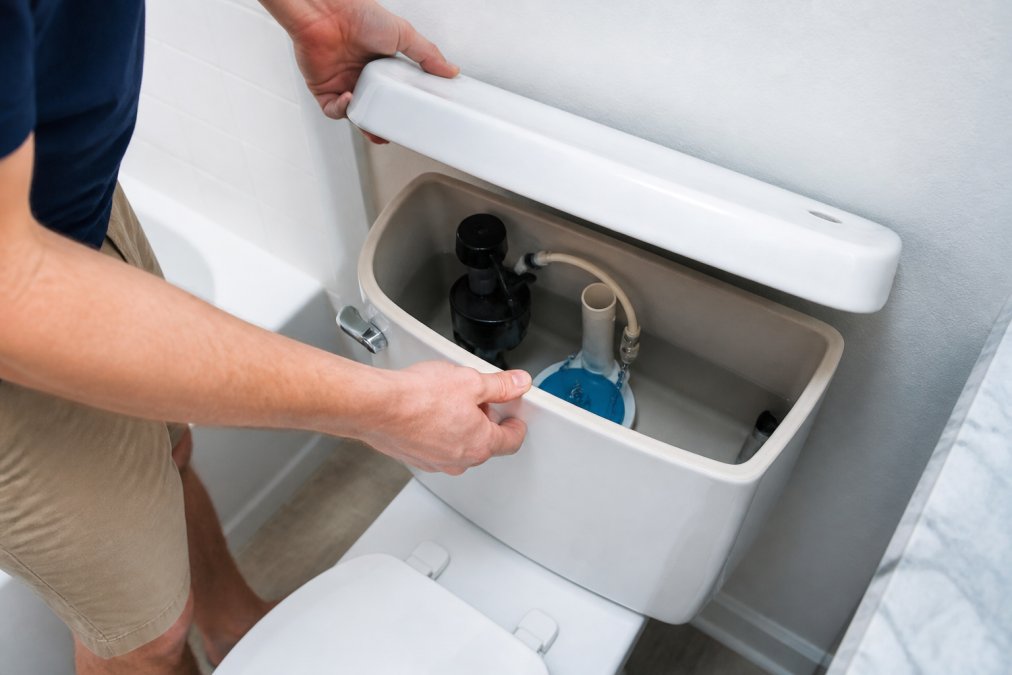
Close-up of a homeowner’s hands lifting a toilet tank lid to inspect the flapper, fill valve, and lift chain inside a clean white toilet tank in a bright bathroom How a Toilet Tank Works
A toilet tank holds water until you press the flush handle. The handle lifts the lift chain, which pulls up the flapper valve. Water rushes from the tank into the bowl, starting the flush cycle.
Once the tank empties, the flapper drops back down and seals the opening. The fill valve then refills the tank to a set water level. A float, either a ball or a cup, rises with the water and shuts the fill valve off when the tank is full.
Every part in that chain has to work. If the flapper does not seal, water keeps leaking into the bowl. If the fill valve does not shut off, water keeps running into the tank. Either way, you get a toilet that keeps running after flushing.
Inspect the Flapper, Lift Chain, and Float
Start your inspection with the flapper. Look for warping, cracks, or a rough mineral coating on the rubber. Any of these prevent a clean seal against the flush valve opening.
Next, check the lift chain. It should have a little slack, about half an inch. Too tight and it holds the flapper open. Too loose and it may not lift the flapper at all.
Then look at the float.
How to Adjust the Flapper Valve and Lift Chain
Adjusting the flapper valve and lift chain is the fastest fix for most running toilets. You can do it in minutes with no tools beyond your hands.
Check the Lift Chain Tension
The lift chain connects the flush handle to the flapper. It needs just enough slack to let the flapper seal, but not so much that it tangles.
To adjust it:
- Turn off the water at the shut-off valve behind the toilet.
- Flush to empty the tank.
- Find the clip or hook where the chain attaches to the handle arm.
- Move the clip up one or two links to shorten the chain.
- Aim for about half an inch of slack when the flapper is closed.
Test the Flush Mechanism
After adjusting the chain, turn the water back on and test a flush. Watch the flapper as it drops. It should land flat and seal within a second or two.
Pro Tip
A common mistake is over-tightening the chain. That holds the flapper slightly open, which mimics a worn flapper and sends you chasing the wrong part. Always leave a little slack.Toilet Flapper Replacement: When and How to Swap It
Replace the flapper when it is warped, cracked, or coated in mineral deposits that will not scrub off. A flapper that has lost its flexibility will never seal properly, no matter how you adjust the chain.
To replace it:
- Shut off the water supply and flush the tank empty.
- Unhook the lift chain from the flush handle arm.
- Slide the old flapper off the overflow tube or unclip it from its mounts.
- Take the old flapper to the store to match the size and style.
- Install the new flapper on the overflow tube or mounts.
- Reconnect the chain with about half an inch of slack.
- Turn the water back on and test two or three flushes.
Adjusting Toilet Float Height and the Fill Valve
Adjusting toilet float height fixes a fill valve that will not shut off. The float tells the fill valve when the tank is full. If it sits too high, the valve keeps running. If it sits too low, the tank never fills enough for a strong flush.
Troubleshoot the Float Ball or Float Cup
A float ball sits on a metal arm. To adjust it, turn the adjustment screw on the fill valve or bend the arm slightly to change the water level.
Watch Out
Do not bend a plastic float arm. It snaps easily, and then you are replacing the whole fill valve instead of adjusting it. Use the adjustment screw whenever one is present.Preventative Maintenance and Eco-Friendly Repair Tips
A short maintenance routine keeps a running toilet from coming back. It also cuts water waste, which matters if you are watching your bill or trying to use less water.
Add these tasks to your routine:
- Test the flapper seal every few months by adding a few drops of food coloring to the tank
- Check the lift chain tension and untangle any kinks
- Wipe mineral buildup off the flapper and flush valve seat
- Confirm the water level sits about an inch below the overflow tube
- Look for corrosion on the handle arm and fill valve
- Replace the flapper every few years, even if it looks fine
Frequently Asked Questions
What is the most common cause of a constantly running toilet?
A worn or misaligned flapper valve is the most common cause. The flapper is the rubber seal at the bottom of the tank that holds water until you flush. Over time, mineral buildup and chlorine in the water cause the rubber to warp, crack, or lose its seal. When that happens, water seeps from the tank into the bowl continuously, and the fill valve keeps refilling the tank. Replacing the flapper usually solves the problem for a few dollars in parts.
How do I know if my toilet flapper needs to be replaced?
Run your finger along the flapper’s rubber surface. If it feels stiff, cracked, or coated in a slimy film, it needs replacement. You can also add a few drops of food coloring to the tank, wait 15 minutes without flushing, and check the bowl. If color appears in the bowl, the flapper is leaking.
Can a running toilet increase my water bill?
Yes. A constantly running toilet can waste 200 gallons or more per day, depending on the severity of the leak. Over a month, that adds up to thousands of gallons and a noticeably higher water bill. Fixing a running toilet quickly is one of the easiest ways to lower your utility costs. If the water bill impact seems high and you cannot find the leak, a licensed plumber can trace the source.
How do I adjust the water level to stop the toilet from running?
Turn off the shut-off valve behind the toilet, flush to empty the tank, then locate the adjustment screw on the fill valve or the clip on the float rod. Turning the screw clockwise or sliding the clip up raises the water level; the opposite lowers it. Set the water line about 1 inch below the top of the overflow tube. Flush and recheck. If the tank still refills constantly, the fill valve or flapper may need replacing.
CALL 727-475-1474 and 813-579-1920


CFC 1427929
Serving Pasco County 25+ Years
info@purplumbing.com
Fix a Toilet That Keeps Running After Flushing
September 28, 2026 | Blog
- Reageer
For more information or to request an appointment dial 727-475-1474 and 813-579-1920
Serving Pasco County 25+ Years, info@purplumbing.com
Carrollwood
Clearwater
Dunedin
Holiday
Land O Lakes
Lutz
New Port Richey
Oldsmar
Palm Harbor
Plant City
Saint Petersburg
Tampa
Tarpon Springs
Temple Terrace
Town N Country
Trinity
West Chase
Site Designed by GoProLocal