Table of Contents
- Why Commercial Plumbing Maintenance Matters
- Monthly Inspection Checklist for Commercial Plumbing Systems
- Quarterly Testing and Valve Maintenance
- Seasonal Maintenance: Water Heater and Boiler Care
- Commercial Drain Cleaning Frequency and Scheduling
- Commercial Lift Station Maintenance Services
- Using a Plumbing Maintenance Log Template
- Regulatory Compliance and Documentation
Last Updated: August 21, 2026
Why Commercial Plumbing Maintenance Matters
A single undetected water leak in a commercial building can cost thousands in damage and lost productivity. Commercial plumbing maintenance is the foundation that keeps your building operational, protects your assets, and prevents catastrophic failures that shut down operations and drain budgets. At PUR Plumbing, we’ve seen firsthand how facilities that implement structured maintenance protocols avoid emergencies that catch others off guard.
The stakes are higher in commercial settings than residential ones. A burst pipe can compromise multiple floors, damage inventory, interrupt business operations, and expose your organization to liability. A malfunctioning sump pump during heavy rain is a potential flood. A backflow prevention device that hasn’t been tested in two years is a public health risk.
This guide covers a comprehensive commercial plumbing maintenance checklist designed to catch problems before they become crises. Whether you manage an office building, retail space, warehouse, or industrial facility, this framework applies to your operation.
Monthly Inspection Checklist for Commercial Plumbing Systems
The most important maintenance task happens once a month: a structured visual inspection of your plumbing system. Monthly inspections catch 80% of problems before they escalate and establish a baseline for what "normal" looks like at your facility (aspe.org).
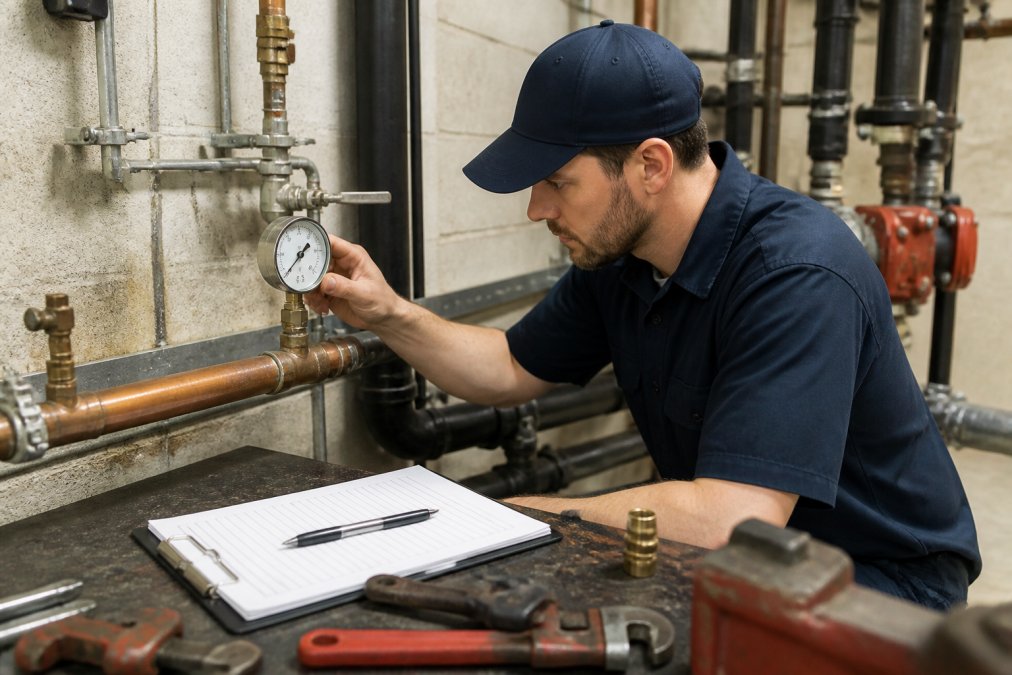
Professional plumber in uniform using a pressure gauge to monitor water pressure on exposed commercial piping in a mechanical room, with maintenance log and clipboard visible on nearby workbench Visual Inspection of Exposed Piping
Walk your mechanical room and utility corridors monthly. Look for corrosion (discoloration, pitting, or white/green deposits on copper or galvanized pipes), condensation on cold-water pipes, and leaks. Early-stage corrosion indicates water quality or pipe material compatibility issues. Excessive condensation suggests high humidity or inadequate pipe insulation, which should be replaced to prevent heat loss and corrosion.
Check all visible pipe joints, seals, and gaskets, these fail first under pressure or thermal expansion. Loose fittings should be tightened; weeping joints need attention. Look for water stains on floors, walls, or around joints. A slow drip you can see is preferable to the leak you can’t; water damage spreads silently behind walls.
Water Pressure Monitoring
Measure water pressure at a representative fixture monthly. Normal commercial water pressure ranges from 40-80 PSI (nspe.org). Anything consistently above 80 PSI indicates excessive municipal pressure or a failed pressure-reducing valve. Anything below 40 PSI suggests a blockage, leak, or undersized supply line.
Install a pressure gauge on the main supply line if you haven’t already. Document readings in your maintenance log. Over months, you’ll see patterns. Seasonal changes are normal; sudden shifts indicate something is changing in your system, often scale buildup or a failing regulator.
Leak Detection and Water Damage Assessment
Check under sinks and around toilet bases for moisture. Look at ceilings below upper-floor bathrooms for water stains. Inspect basement areas for dampness or efflorescence (white mineral deposits indicating water movement). Document any water intrusion with photos and location notes.
Listen for running water when fixtures aren’t in use. A toilet that runs continuously, a valve that weeps, or a pump that cycles unexpectedly all indicate active leaks. These are high-priority repairs because they waste water, drive utility costs, and often signal internal component failure.
Quarterly Testing and Valve Maintenance
Every three months, your maintenance schedule should include performance testing of critical safety and operational devices.
Backflow Prevention Device Testing
Backflow prevention devices protect public water supplies from contamination and are required by code in most commercial facilities. They must be tested annually by a certified professional, but quarterly inspection by your maintenance team adds assurance.
Visually inspect the device for corrosion, leaks, or physical damage. Check that isolation valves are accessible and in good condition. Verify that test cocks are not leaking. A weeping test cock indicates the check valve inside is compromised and needs professional service. Document the device model, installation date, and last professional test date.
Sump Pump Performance Testing
Test sump pumps quarterly. Pour water into the sump pit until the pump activates. Verify that it runs smoothly, discharge flows properly, and it shuts off when water level drops. Check the discharge pipe for blockages. A sump pump that runs but doesn’t discharge is useless in an emergency. Verify that the check valve in the discharge line isn’t stuck or leaking back.
Valve Operation and Maintenance
Quarterly, operate every accessible isolation valve to verify it still moves freely. A valve that hasn’t been operated in months can seize and become useless in an emergency. Turn the valve handle a quarter-turn in each direction; it should move smoothly with moderate hand pressure.
Check pressure-reducing valves for leaks or corrosion. Listen for hissing, which indicates internal wear. Check thermal expansion tanks for corrosion or leaks. These tanks absorb pressure spikes from heating; a failed expansion tank forces all pressure onto your pipes.
Seasonal Maintenance: Water Heater and Boiler Care
Before winter, flush sediment from the water heater or boiler. Sediment buildup reduces efficiency and accelerates corrosion. Drain a bucket or two from the drain valve at the base of the tank until water runs clear. This annual flush extends equipment life significantly.
Inspect the temperature and pressure relief valve. Test it by lifting the lever slightly; a small amount of water should discharge. If nothing happens, the valve is stuck and needs replacement.
Check the expansion tank for proper air charge. A waterlogged expansion tank reduces system efficiency and increases pressure spikes. In summer, verify that any heat rejection systems are clean and functioning. Document all seasonal maintenance.
Commercial Drain Cleaning Frequency and Scheduling
Drain blockages are among the most common commercial plumbing problems. For typical office buildings, drain cleaning every 12 months is standard. For facilities with heavy water usage, restaurants, medical offices, or manufacturing, quarterly cleaning is more appropriate.
Schedule drain cleaning during low-usage periods to minimize operational disruption. Professional drain cleaning uses hydro-jetting or mechanical snakes to remove buildup and restore flow. Document drain cleaning dates and findings. If a particular drain backs up repeatedly, that signals a deeper problem: a collapsed section, misaligned joint, or structural issue requiring investigation.
Commercial Lift Station Maintenance Services
For facilities with lift stations, maintenance is critical. A failed lift station means sewage can’t leave the building, creating both an operational emergency and public health hazard.
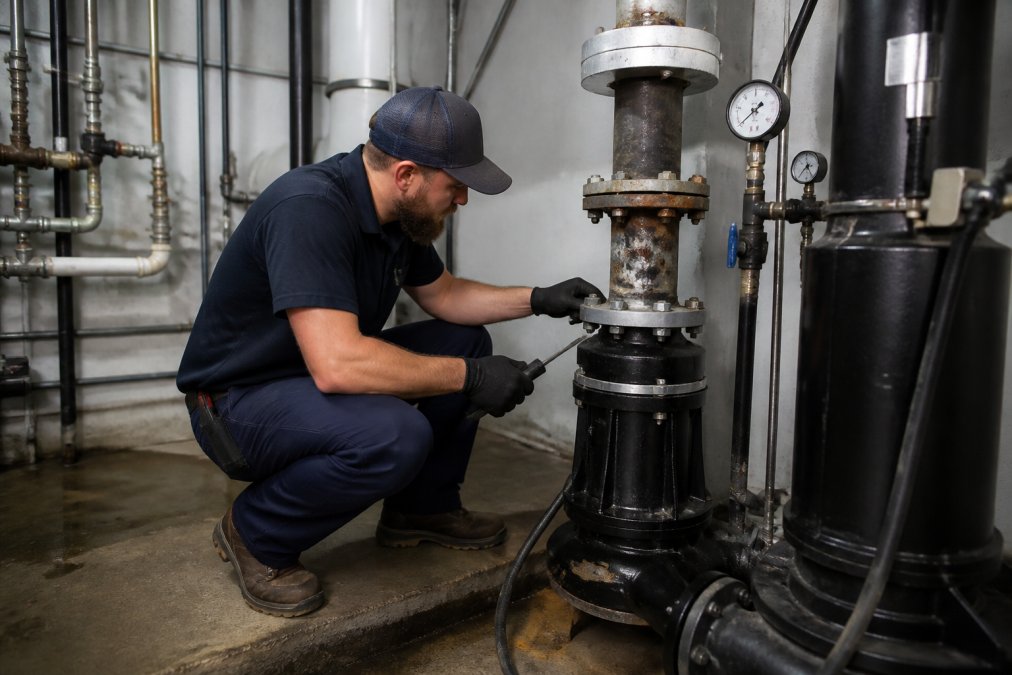
Professional plumber performing hands-on inspection of a commercial lift station pump system with gauges and control panel, checking mechanical seals and discharge valves in a basement utility space Monthly inspection includes checking the pump for unusual noises, vibration, or leaks. Verify that the control panel displays normal operation and alarm indicators are functioning. Check that the discharge pipe is clear and the check valve isn’t leaking back.
Quarterly, test the pump through a full cycle. Verify that it starts, runs at normal speed, and shuts off at the expected level. Check that the float switch or level sensor responds correctly. If the pump cycles more frequently than normal, the basin may have an inflow problem or the pump may be undersized.
Annual professional service is essential. This includes removing and inspecting the pump impeller, checking mechanical seals for wear, and verifying all internal components function properly. Document all lift station maintenance to create a service history that informs whether the pump is aging toward replacement or running well.
Using a Plumbing Maintenance Log Template
A maintenance log is the difference between reactive firefighting and proactive management. It’s also your documentation of due diligence if a problem occurs and liability questions arise.
Your log should include: date and inspector name, system or component inspected, observations (normal, minor issue, or urgent problem), action taken, and next inspection date. Use a simple spreadsheet or dedicated facility management software. Monthly entries create a pattern that reveals trends. A maintenance log also protects your organization, it demonstrates that you exercised reasonable care if a problem occurs.
Regulatory Compliance and Documentation
Commercial plumbing systems are subject to building codes, health department regulations, and local ordinances. Compliance is a legal requirement and liability issue.
Backflow prevention testing must be performed annually by a certified professional, with results documented and reported to your local health department or water authority. Lapsed testing is a code violation and can result in fines or loss of water service.
Lift station maintenance may be subject to specific municipal requirements. Check with your local health department or public works office to understand what applies to your facility. Maintenance records should be retained for a minimum of three years.
Create a compliance calendar that tracks all required testing and documentation deadlines. Assign responsibility for each task. According to EPA guidance on water system maintenance, facility managers are responsible for ensuring that all water systems meet applicable safety standards. Documented maintenance is your primary tool for demonstrating compliance.
A well-maintained commercial plumbing system works reliably without emergencies or surprises. The cost of maintaining that reliability is far lower than the cost of failures. PUR Plumbing has helped facilities implement maintenance protocols that catch problems early and keep systems running smoothly. If you’re ready to move from reactive repairs to proactive maintenance, contact PUR Plumbing to discuss a customized maintenance program for your facility. With over 25 years serving commercial properties, our team knows what works and what doesn’t. Get started with a facility assessment and maintenance plan that protects your building, your operations, and your bottom line.
Frequently Asked Questions
What should be included in a commercial plumbing maintenance checklist?
A comprehensive commercial plumbing maintenance checklist covers visual inspection of exposed piping for corrosion and leaks, water pressure monitoring, backflow prevention device testing, drainage system cleaning, sump pump performance testing, valve operation checks, water heater and boiler inspections, and leak detection assessments. Each item should be documented in a maintenance log with dates and findings. The checklist helps prevent costly downtime and ensures facility compliance with plumbing codes.
How often should commercial plumbing systems be inspected?
Monthly visual inspections are recommended for exposed piping, water pressure, and leak detection. Quarterly testing should include backflow prevention devices, sump pumps, and valve operation. Seasonal maintenance covers water heater and boiler care, typically before peak usage periods. Drainage systems require cleaning based on usage patterns, high-traffic facilities may need monthly cleaning, while others benefit from quarterly or semi-annual service. Document all inspections in your maintenance log.
What are the benefits of preventive plumbing maintenance for businesses?
Preventive maintenance reduces emergency repair costs, minimizes water damage to property and inventory, prevents business interruptions from burst pipes or fixture failures, extends the lifespan of equipment like water heaters and boilers, maintains water quality and pressure consistency, and ensures regulatory compliance. Facilities with documented preventive maintenance programs experience fewer catastrophic failures and lower overall plumbing expenses. Regular inspections catch small issues before they become expensive problems.
How do you maintain a commercial lift station?
Lift station maintenance includes monthly visual inspections of the basin for debris, pump operation checks, seal and gasket condition assessment, and performance testing of float switches and alarms. Quarterly tasks involve testing the discharge line for proper flow rate and checking for corrosion on metal components. Annual maintenance should include professional servicing of the pump, motor, and control systems. Keep detailed records in your maintenance log and schedule professional commercial lift station maintenance services at least twice yearly.
What are the most common commercial plumbing issues to watch for in 2026?
Common issues include corrosion of older pipe joints, scale buildup in water lines affecting flow rate and water quality, thermal expansion damage in high-temperature systems, condensation and moisture problems in mechanical rooms, backflow prevention device failures, drainage blockages from grease or debris, and sump pump performance degradation. Modern facilities should also monitor IoT-enabled smart monitoring systems for early leak detection and water pressure anomalies. Regular preventive maintenance catches these issues before they disrupt operations.
Do you need to hire a licensed plumber for commercial maintenance, or can facility staff handle it?
While facility staff can perform basic visual inspections and document findings, certain tasks require licensed professionals. Backflow prevention device testing, lift station maintenance, water heater servicing, and compliance-related inspections must be performed by licensed plumbers to meet code requirements and maintain valid certifications. Hiring professional commercial plumbing maintenance services ensures proper documentation, regulatory compliance, and expert identification of issues facility staff might miss.
What should a plumbing maintenance log template include?
A plumbing maintenance log template should capture the date of inspection, technician name and license number, items inspected (piping, valves, pumps, drains, water heater), findings and observations, water pressure readings, any repairs or adjustments made, parts replaced, next scheduled maintenance date, and signature or approval. Digital templates allow photos and notes to be attached. This documentation proves compliance, supports warranty claims, and helps identify patterns in facility problems over time.
How does IoT monitoring improve commercial plumbing maintenance?
Smart monitoring systems provide real-time alerts for water pressure drops, leak detection, unusual flow rates, and temperature anomalies in water heaters and boilers. These systems reduce response time to problems, prevent water damage by catching leaks early, and generate automated maintenance logs. IoT integration allows facility managers to track performance trends and schedule preventive maintenance before failures occur. This technology complements traditional inspections and helps facilities meet sustainability and water conservation goals.
This article was written using GrandRanker
CALL 727-475-1474 and 813-579-1920


CFC 1427929
Serving Pasco County 25+ Years
info@purplumbing.com
Commercial Plumbing Maintenance Checklist 2026
August 21, 2026 | Blog
- Reageer
For more information or to request an appointment dial 727-475-1474 and 813-579-1920
Serving Pasco County 25+ Years, info@purplumbing.com
Carrollwood
Clearwater
Dunedin
Holiday
Land O Lakes
Lutz
New Port Richey
Oldsmar
Palm Harbor
Plant City
Saint Petersburg
Tampa
Tarpon Springs
Temple Terrace
Town N Country
Trinity
West Chase
Site Designed by GoProLocal