Table of Contents
- What Commercial Lift Station Maintenance Services Include
- Developing a Lift Station Preventative Maintenance Schedule
- Using a Lift Station Inspection Checklist for System Diagnostics
- Emergency Lift Station Services and Rapid Response
- Regulatory Compliance and Maintenance Documentation
- Cost-Benefit Analysis: Proactive Maintenance vs. Reactive Repairs
- Energy Efficiency and IoT Monitoring Technology
- Conclusion
Last Updated: August 27, 2026
What Commercial Lift Station Maintenance Services Include
Commercial lift station maintenance services encompass a comprehensive range of critical activities designed to keep wastewater management systems operating reliably and safely. A lift station is a critical component of any commercial plumbing infrastructure, using submersible pumps and grinder pumps to move effluent upward against gravity when gravity-fed drainage isn’t possible. These systems require specialized attention because they handle high-volume flows, operate continuously, and directly impact facility operations and environmental compliance.
Effective lift station maintenance services include routine inspections of the wet well, pump cycle monitoring, control panel assessment, float switch testing, telemetry system checks, and emergency response capabilities. Preventative maintenance programs focus on identifying potential failures before they become costly shutdowns. PUR Plumbing’s approach to commercial lift station maintenance services combines scheduled inspections with rapid-response protocols to minimize downtime and protect your facility’s wastewater infrastructure.
The scope of these services extends beyond simple repairs. System diagnostics examine electrical troubleshooting, motor performance evaluation, and alarm monitoring to catch problems early. Manhole and wet well cleaning removes accumulated debris and sediment that can compromise pump efficiency. Hydro-jetting clears blockages in discharge lines. When equipment fails, emergency lift station services ensure technicians arrive quickly with fully loaded vehicles equipped to handle pump replacement, control panel repairs, and other critical fixes.
Pro Tip
Most facility managers underestimate how much preventative maintenance saves in emergency repair costs. A single pump failure can cost thousands in emergency service fees plus facility downtime. Scheduled inspections catch wear patterns before catastrophic failure occurs.Developing a Lift Station Preventative Maintenance Schedule
The foundation of reliable wastewater management is a structured preventative maintenance schedule tailored to your facility’s specific demands. Rather than waiting for failure, proactive maintenance establishes inspection intervals that match your system’s operational patterns, environmental conditions, and regulatory requirements.
A well-designed preventative maintenance schedule typically follows a tiered approach: monthly visual inspections, quarterly performance evaluations, and comprehensive annual system diagnostics. This rhythm catches developing problems while keeping maintenance costs predictable. The frequency may increase for high-volume facilities or systems operating in challenging conditions.
Monthly, Quarterly, and Annual Inspection Intervals
Monthly inspections form the first line of defense in your preventative maintenance program. During these visits, technicians verify that the system is operating normally, check for unusual sounds or vibrations, inspect the wet well for debris accumulation, and confirm that alarms are functioning. These quick assessments take 30-45 minutes and often prevent small issues from becoming emergencies (nspe.org).
Quarterly inspections dig deeper. Technicians perform more detailed pump cycle monitoring, test float switches and alarm systems under controlled conditions, inspect electrical connections for corrosion or damage, and assess control panel operation. They’ll also check discharge line pressures and verify that the system is cycling at appropriate intervals. These inspections typically require 1-2 hours and generate detailed reports documenting system performance (wef.org).
Annual comprehensive inspections represent your most thorough evaluation. These include complete system diagnostics, motor performance testing, electrical troubleshooting of the control panel, manhole and wet well cleaning, and hydro-jetting of discharge lines if needed. Annual inspections often reveal wear patterns that inform equipment replacement decisions and help you budget for future upgrades or rehabilitation work.
Pump Cycle Monitoring and Motor Performance
Understanding your pump’s operational patterns is central to preventative maintenance. Pump cycle monitoring tracks how frequently the pump activates, how long it runs per cycle, and the intervals between cycles. Normal patterns vary by facility, but deviations signal problems worth investigating.
If cycles become more frequent, the system may be receiving more inflow than designed, or the pump may be losing efficiency. If cycles become erratic or the pump runs continuously, float switches may be malfunctioning or the pump may be failing. Motor performance evaluation measures amperage draw, voltage, and temperature to detect developing electrical or mechanical problems before they cause complete failure.
Key Takeaway
Abnormal pump cycles are your earliest warning sign of system stress. Catching these patterns during quarterly inspections prevents emergency repairs that disrupt your facility’s operations.Using a Lift Station Inspection Checklist for System Diagnostics
A comprehensive lift station inspection checklist ensures that technicians evaluate every critical component systematically. This structured approach prevents overlooked problems and creates consistent documentation for compliance purposes.

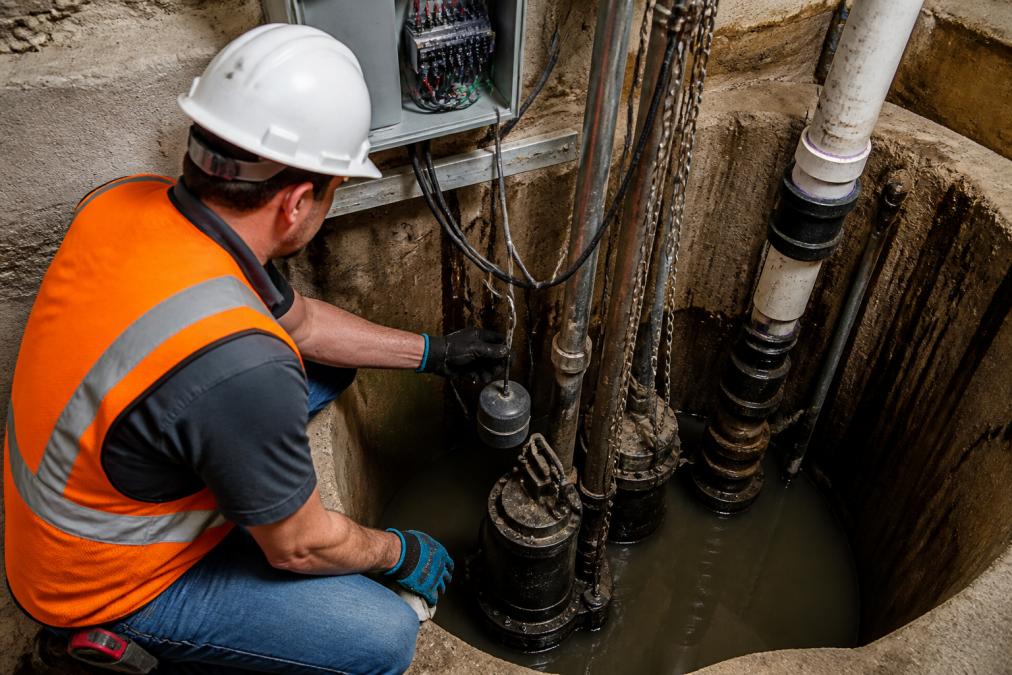
Professional plumber in safety gear performing hands-on inspection of a commercial lift station wet well, checking submersible pump components, float switches, and control panel wiring in proper lighting The checklist should cover physical condition assessment, operational testing, electrical evaluation, and environmental factors. Each section includes specific items that require attention: Is the wet well free of debris? Are pump mounting bolts tight? Do float switches move freely? Are electrical connections clean and secure? Does the control panel show error codes? Is the discharge line clear of blockages?
Wet Well and Control Panel Assessment
The wet well is where incoming wastewater collects before the pump activates. A proper wet well assessment checks for sediment and debris accumulation, verifies that the pump can move freely, inspects the wet well walls for cracks or deterioration, and confirms that the pump intake screen is clear. Excessive debris indicates that upstream screening or treatment isn’t working properly and may require facility-wide attention.
Control panel assessment examines the electrical brain of your lift station system. Technicians verify that all indicator lights function, check for error codes or fault indicators, test alarm circuits, inspect relay and contactor operation, and ensure that backup power systems (if present) are charged and operational. The control panel is where many problems first announce themselves, making it a critical diagnostic tool.
Float Switches, Telemetry, and Alarm Monitoring
Float switches are mechanical sensors that trigger pump activation when water levels rise. These simple devices are surprisingly prone to failure because they’re exposed to wastewater, grease, and debris. A proper inspection verifies that floats move freely, that they’re positioned correctly, and that they’re sending proper signals to the control panel.
Telemetry systems allow remote monitoring of your lift station, sending alerts to facility managers or service providers when problems develop. If your system includes telemetry, inspection should verify that sensors are reading accurately, that communication links are functioning, and that alarm signals are reaching the intended recipients. Many facilities discover during inspections that their telemetry alerts have been silenced or misconfigured, defeating the entire purpose of remote monitoring.
Alarm monitoring ensures that when problems occur, someone knows about them immediately. This includes high-level alarms that activate when the wet well fills beyond safe limits, low-level alarms that indicate pump failure, power failure alarms, and motor overload alarms. A malfunctioning alarm system can mean a complete system failure goes unnoticed until catastrophic damage occurs.
Emergency Lift Station Services and Rapid Response
Despite the best preventative maintenance programs, emergencies happen. A pump bearing seizes. A control panel fails. A discharge line backs up. When your lift station stops working, wastewater backs up into your facility, creating immediate operational and environmental hazards.
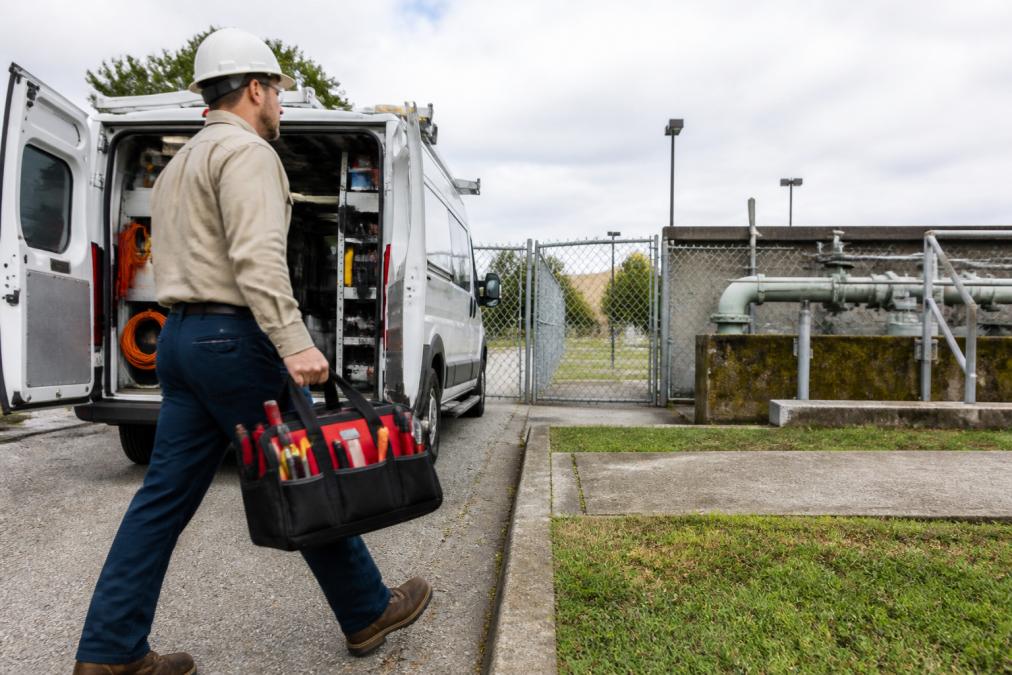
Professional service technician in full safety gear arriving at commercial facility with fully loaded service vehicle, demonstrating rapid emergency response capability for lift station repair Emergency lift station services require technicians who understand the equipment, have the right tools and replacement parts immediately available, and can work under pressure. PUR Plumbing maintains fully loaded vehicles with common replacement components, allowing technicians to diagnose and repair many problems on the first visit rather than requiring multiple trips.
Rapid response protocols mean that when you call about a failing lift station, a technician arrives quickly with the capability to assess the problem, determine whether it’s repairable or requires pump replacement, and implement a solution. For many facilities, the difference between a one-hour response and a four-hour response is the difference between a contained problem and significant operational disruption.
Common emergency repairs include pump replacement when bearing failure or seal damage makes the unit unserviceable, control panel replacement when electrical failure leaves the system unable to operate, float switch replacement when sensors fail and the pump won’t activate, and discharge line clearing when blockages back up the system. Each emergency repair is different, but the principle remains the same: diagnose quickly, fix immediately, and restore normal operation.
Regulatory Compliance and Maintenance Documentation
Wastewater lift stations are regulated infrastructure. Depending on your facility type and location, you may be required to maintain detailed records of inspections, repairs, and system performance (the EPA). These regulatory requirements exist because lift station failures can cause environmental contamination, public health hazards, and significant property damage.
Documentation requirements typically include inspection dates and findings, repair work performed and dates completed, replacement parts and serial numbers, motor amperage and voltage readings, and any system modifications or upgrades. Many jurisdictions require that these records be available for inspection and that certain types of work be performed by licensed professionals.
Compliance checklists should address your specific regulatory environment. Some facilities operate under municipal wastewater treatment authority oversight, others under state environmental regulations, and some under federal standards depending on the nature of the wastewater being handled. Understanding which regulations apply to your facility ensures that your preventative maintenance program meets legal requirements.
Watch Out
Incomplete maintenance documentation can result in regulatory violations even if your system is functioning properly. Agencies may assess penalties or require expensive remediation work if they find gaps in your maintenance records during inspections.Cost-Benefit Analysis: Proactive Maintenance vs. Reactive Repairs
The financial case for preventative maintenance is straightforward once you understand the true cost of system failure. A reactive approach, waiting until something breaks, creates several cost categories that preventative maintenance largely avoids.
Preventative maintenance costs are predictable and relatively modest. The cost of a preventative maintenance program for a commercial lift station depends on system complexity and operational needs. Over a year, a preventative maintenance program can be a cost-effective investment compared to emergency repairs.
Emergency repairs, by contrast, are expensive and unpredictable. A pump replacement in an emergency situation costs significantly more than a planned replacement because technicians must respond immediately, work with whatever parts are available, and often work overtime hours. Beyond the direct repair cost, there’s the cost of facility downtime. For a restaurant, retail business, or manufacturing facility, even a few hours of wastewater backup can mean lost revenue, customer disruption, and operational complications that extend far beyond the repair itself.
The cost-benefit analysis becomes even more compelling when you consider secondary consequences. A failed lift station that backs up wastewater into your facility can cause property damage requiring expensive cleanup and remediation. Environmental agencies may assess penalties if wastewater reaches storm drains or surface water. Regulatory violations related to system failure can trigger fines or mandatory upgrades.
Most facility managers find that investing in preventative maintenance is far preferable to the cost of an emergency pump replacement plus the operational disruption and potential secondary damage.
Energy Efficiency and IoT Monitoring Technology
Modern lift station systems increasingly incorporate IoT (Internet of Things) monitoring technology that provides real-time visibility into system performance. These systems track pump runtime, cycle frequency, motor amperage, and other operational metrics, allowing facility managers to understand exactly how their system is performing.
Energy efficiency optimization begins with understanding your actual energy consumption. Many lift stations operate inefficiently because nobody is monitoring their performance closely enough to catch the problem. A pump that cycles more frequently than it should, or a motor running at higher amperage than normal, indicates inefficiency that wastes energy and accelerates equipment wear.
IoT monitoring systems alert facility managers when performance deviates from normal patterns, allowing quick diagnosis of developing problems. Remote monitoring means you don’t have to wait for a scheduled inspection to discover that your pump is cycling abnormally or your motor is drawing excessive current. Some systems integrate with preventative maintenance scheduling, automatically triggering service calls when performance metrics suggest that inspection or maintenance is needed.
The investment in IoT monitoring can pay for itself through energy savings and avoided emergency repairs. Beyond the financial case, remote monitoring provides peace of mind. You know your system is operating properly because you’re watching the data in real time.
Commercial lift station maintenance services protect one of your facility’s most critical infrastructure systems. The choice between preventative maintenance and reactive repairs isn’t really a choice at all, preventative maintenance is simply the more intelligent, cost-effective approach. Facilities that implement structured maintenance schedules, use comprehensive inspection checklists, maintain detailed compliance documentation, and embrace modern monitoring technology avoid the expensive emergencies that disrupt operations and damage property.
PUR Plumbing has served commercial facilities throughout Pasco County for over 25 years, helping property managers develop and execute maintenance programs that keep lift stations operating reliably. Our licensed technicians understand wastewater management systems, respond quickly to emergencies, and provide the detailed documentation that regulatory compliance requires. If you’re managing a commercial facility with a lift station, contact us to discuss a preventative maintenance program designed for your specific system and operational needs.
Frequently Asked Questions
How often should a commercial lift station be serviced?
Most commercial lift stations require routine servicing every 1-3 months, depending on flow volume and system complexity. Monthly inspections catch early signs of wear on submersible pumps and float switches. Quarterly maintenance includes wet well cleaning and debris removal. Annual comprehensive diagnostics assess electrical troubleshooting, grinder pump performance, and overall infrastructure longevity. High-volume facilities may need more frequent attention. A licensed professional can recommend the right schedule for your system.
What does a lift station inspection checklist typically cover?
A thorough lift station inspection checklist includes float switch operation, control panel functionality, submersible pump performance, wet well condition, alarm monitoring systems, telemetry status, electrical connections, and debris accumulation. Technicians verify that effluent flows properly, check for signs of system failure, assess motor repair needs, and document all findings. Regular inspections prevent overflow prevention failures and ensure compliance with local wastewater management standards.
What are the common signs that my lift station needs emergency repair?
Watch for alarms that activate frequently, sewage backup into your facility, unusual noises from the pump station, or visible overflow. Control panel lights that won't reset, float switches stuck in the raised position, and grinder pump failure all require immediate attention. If you notice foul odors or wet areas around the manhole, contact a professional for emergency lift station services right away. Delays can result in system failure and costly sewage overflow damage.
Is proactive maintenance really more cost-effective than waiting for repairs?
Yes. Preventative maintenance catches small issues before they become expensive failures. A submersible pump replacement costs significantly more than scheduled servicing and hydro-jetting. System downtime can halt operations entirely. Routine inspections and debris removal extend infrastructure longevity by years. Facilities that follow a structured maintenance schedule report fewer emergency calls and lower overall costs. The investment in scheduled servicing protects your wastewater management system and your bottom line.
How can IoT and remote monitoring improve lift station performance?
Remote monitoring systems track pump cycles, motor performance, and alarm status in real time. Telemetry alerts facility managers to potential issues before they become emergencies. IoT sensors monitor effluent flow and detect early signs of system failure. These systems reduce the need for on-site visits while improving compliance documentation. Energy efficiency optimization through remote data analysis can lower operating costs. Ask your service provider about available monitoring technology for your facility.
What regulatory standards govern commercial lift station maintenance?
Lift stations must comply with EPA wastewater management regulations and local discharge permits. Most jurisdictions require documented preventative maintenance programs and regular system inspections. Facilities must maintain records of all servicing, repairs, and compliance checks. Specific requirements vary by location and facility size. A licensed plumbing professional familiar with local codes can ensure your maintenance program meets all regulatory standards and protects your facility from violations.
Can I perform lift station maintenance myself, or do I need a licensed professional?
Commercial lift station maintenance requires specialized knowledge and licensing. Improper work can damage submersible pumps, grinder pumps, or electrical systems, creating safety hazards and compliance violations. Licensed professionals have the tools, training, and insurance to handle complex diagnostics, pump replacement, and control panel troubleshooting safely. Attempting DIY repairs typically voids warranties and creates liability. Hire a licensed, insured professional to protect your facility and ensure compliance.
What is the typical lifespan of a commercial lift station?
With proper preventative maintenance, a commercial lift station can operate 15-20 years or longer. Submersible pumps typically last 5-10 years depending on usage. Grinder pumps may need replacement sooner in high-volume applications. Control panels and electrical components can last 10-15 years. Regular servicing, timely pump replacement, and debris removal all extend system life. Facilities that neglect maintenance see premature system failure and costly emergency repairs. Schedule routine inspections to maximize your investment's lifespan.
This article was written using GrandRanker
CALL 727-475-1474 and 813-579-1920


CFC 1427929
Serving Pasco County 25+ Years
info@purplumbing.com
Commercial Lift Station Maintenance Services: A 2026 Guide
September 16, 2026 | Blog
- Reageer
For more information or to request an appointment dial 727-475-1474 and 813-579-1920
Serving Pasco County 25+ Years, info@purplumbing.com
Carrollwood
Clearwater
Dunedin
Holiday
Land O Lakes
Lutz
New Port Richey
Oldsmar
Palm Harbor
Plant City
Saint Petersburg
Tampa
Tarpon Springs
Temple Terrace
Town N Country
Trinity
West Chase
Site Designed by GoProLocal