Table of Contents
- Why Water Heater Efficiency Matters for Your Home
- 1. Adjust Water Heater Temperature Settings for Efficiency
- 2. Insulate the Tank and Pipes to Reduce Standby Heat Loss
- 3. How to Flush a Water Heater for Better Performance
- 4. Install Low-Flow Fixtures to Cut Hot Water Demand
- 5. Upgrade to a Heat Pump Water Heater or Tankless System
- 6. Schedule Annual Maintenance and Energy Audits
- 7. Best Water Treatment Systems 2026 for Scale Prevention
- Quick Reference: The 7 Fixes at a Glance
- Frequently Asked Questions
Last Updated: September 18, 2026
Why Water Heater Efficiency Matters for Your Home
Heating water is one of the biggest energy drains in any home. It typically ranks second only to heating and cooling, and it runs all day, even when nobody is awake. That constant cycle of heating and re-heating is called standby heat loss, and it quietly adds to your utility bills month after month.
1. Adjust Water Heater Temperature Settings for Efficiency
The fastest win is turning down the dial. Most water heaters leave the factory set around 140°F, which is hotter than most homes need. Lowering it saves energy every single day.
The 120°F Sweet Spot
Set your water heater to 120°F. That temperature handles showers, dishes, and laundry fine, while cutting standby heat loss. The U.S. Department of Energy guidance on water heating notes that each 10°F reduction can trim energy use by 3% to 5%.
How to Check and Adjust Your Thermostat
- Turn off power at the breaker (electric) or set the gas valve to pilot
- Remove the access panel and insulation
- Use a thermometer at the nearest faucet to confirm current temp
- Turn the dial down in small steps, then re-test after two hours
- Wait a full day before judging the result
Watch Out
On electric heaters, always cut power at the breaker before touching the thermostat. The upper element sits near live wiring, and skipping this step is a real shock hazard.2. Insulate the Tank and Pipes to Reduce Standby Heat Loss
Thermal insulation is the cheapest way to stop heat from escaping. A tank that stays warm needs less reheating, and that shows up on your utility bills.
Choosing the Right Water Heater Blanket
A thermal blanket wraps the tank and holds heat in. It helps most on older units. Newer tanks often have built-in foam insulation, so check the energy efficiency rating label first.
- Skip the blanket if the tank is already rated high-efficiency
- Never cover the top, the flue, or the burner access on gas units
- Follow the manufacturer’s instructions exactly
Pipe Wrap for Hot and Cold Lines
Pipe wrap sleeves the first few feet of pipe leaving the tank. Insulate both hot and cold lines within three feet of the heater. This reduces heat loss and prevents condensation on cold pipes in humid rooms.
3. How to Flush a Water Heater for Better Performance
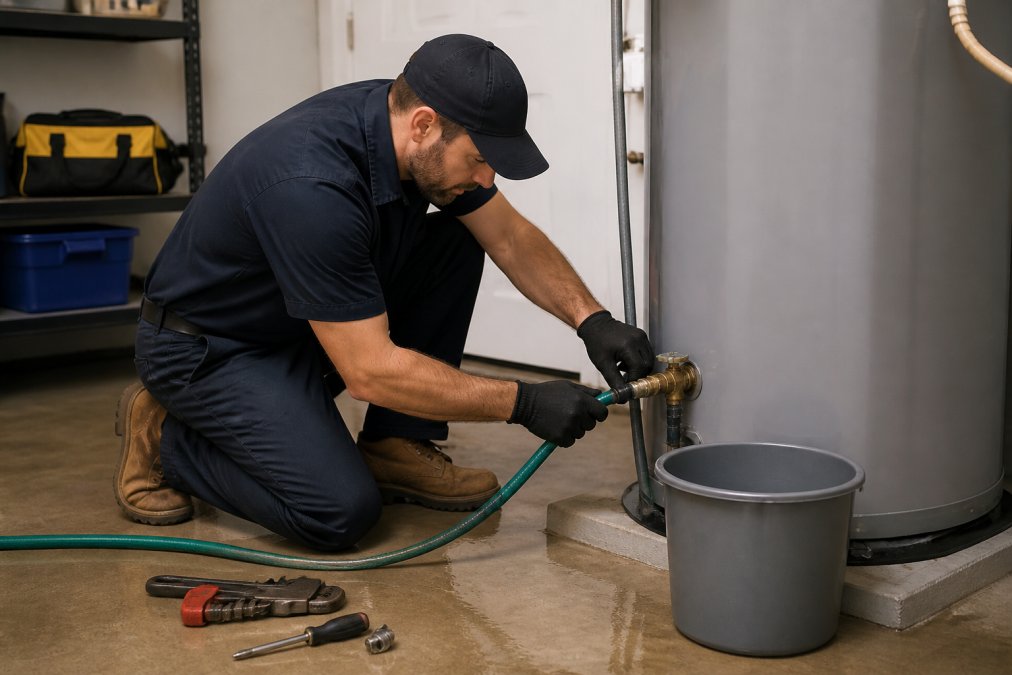
Flushing removes sediment buildup that settles at the bottom of the tank. That layer of minerals forces the heating element to work harder and can shorten the unit’s life. Learning how to flush a water heater for better performance takes about an hour and needs no special skill.

Plumber connecting a hose to a water heater drain valve to improve energy efficiency Step-by-Step Flushing Process
- Shut off power or set the gas valve to pilot
- Close the cold water supply valve
- Connect a garden hose to the drain valve
- Run the hose to a floor drain or outside
- Open a hot tap nearby to let air in
- Drain the tank fully, then open the supply valve to rinse
- Close everything, refill, and restore power
Safety Warnings for DIY Maintenance
- The water leaving the tank is scalding hot, so wear gloves
- Never drain a tank while the power is still on
- On gas units, a bad dip tube or blocked flue needs a pro
- If you see rust or a leaking valve, stop and call a licensed plumber
Pro Tip
Flush once a year in areas with hard water, and every other year if your water is soft. Set a calendar reminder for the same month each year so it actually happens.4. Install Low-Flow Fixtures to Cut Hot Water Demand
Cutting hot water demand at the source works better than heating more of it. Low-flow showerheads use far less water than older models while still feeling strong. The same goes for faucet aerators.
- Swap showerheads for low-flow versions
- Add aerators to kitchen and bathroom taps
- Fix dripping faucets, since a steady drip wastes hot water all day
5. Upgrade to a Heat Pump Water Heater or Tankless System
When your current unit is old and repairs pile up, an upgrade can pay off. A heat pump water heater (also called a hybrid) pulls warmth from the surrounding air instead of generating it directly, so it uses far less electricity. A tankless water heater heats on demand and avoids standby heat loss completely. Both qualify for federal incentives under the ENERGY STAR tax credit guidance, which is worth checking before you sign a quote.
Cost-Benefit Analysis: Insulation vs. Replacement
Most guides tell you to ‘weigh the factors’ and stop there. Here’s the actual math framework so you can prioritize spending:
- First, price the cheap fixes. A tank insulation blanket and pipe wrap typically cost under $50 in materials and can cut standby losses meaningfully on an older tank. If your tank is under 10 years old, this is almost always the better first dollar spent.
- Then, compare against replacement. A heat pump water heater generally carries a higher upfront unit price than a standard electric tank, but it uses roughly half the electricity for the same hot water. Tankless gas units cost more to install because of venting and gas line sizing, but they eliminate standby loss entirely.
- Do the payback math. Take your current monthly water heating cost, estimate the percentage reduction from the upgrade (heat pumps commonly cut water heating energy use by about half versus a standard electric resistance tank), and divide the net installed cost by the monthly savings. That gives you a rough months-to-payback figure. If it lands under the expected lifespan of the unit, the upgrade usually makes sense.
- Factor in lifespan. Storage tanks commonly last 8-12 years; heat pump and tankless units often run longer with maintenance. A replacement that’s ‘early’ by two years can still win if the new unit outlasts the old one by five.
Regional Climate Considerations
Efficiency gains from a heat pump water heater depend heavily on where the unit sits. In a warm garage or unconditioned basement, a heat pump has plenty of ambient heat to draw from and performs near its rated efficiency. In a cold northern basement, the same unit works harder and can cool the space around it, which some homeowners notice in winter.
Smart Home Integration and Temperature Control
Smart temperature control lets you set schedules and monitor use from your phone. A Wi-Fi-enabled controller or smart plug on a heat pump water heater can shift heating to off-peak hours, when utility rates are lower in many markets. Some systems learn your habits and dial back during low-demand windows. This pairs especially well with a tankless water heater or heat pump model, since both respond quickly when demand returns.
Pro Tip
Before you buy, check your utility’s rebate page and the federal incentive database. Stacking a utility rebate with a tax credit can change the payback math by years.6. Schedule Annual Maintenance and Energy Audits
Preventative maintenance keeps a system running at peak performance. A yearly check catches small issues before they become costly repairs.
- Test the temperature differential and pressure relief valve
- Check the anode rod for corrosion
- Clear sediment and inspect the drain valve
- Review the energy efficiency rating and overall system performance
Key Takeaway
Annual maintenance is the single cheapest way to protect your investment. It costs far less than a mid-winter replacement and keeps efficiency from slipping year after year.7. Best Water Treatment Systems 2026 for Scale Prevention
Hard water is the root cause of most sediment buildup. The best water treatment systems 2026 can soften water before it ever reaches the tank, which slows scale and protects the heating element. This is one of the most overlooked fixes on this list.
Best For
Homes with hard water or visible scale on fixtures and showerheads. If your water leaves white crust behind, treatment is worth testing.Quick Reference: The 7 Fixes at a Glance
Fix Effort Frequency Main Benefit Lower thermostat to 120°F Minutes Once Cuts standby heat loss Insulate tank and pipes 1-2 hours Once Less heat loss Flush the tank 1 hour Yearly Removes sediment Low-flow fixtures 30 minutes Once Lower hot water demand Upgrade heater Pro install Once Big energy savings Annual maintenance Pro visit Yearly Peak performance Water treatment Pro install Once Stops scale buildup Frequently Asked Questions
What is the best temperature for a water heater to save money on hot water bills?
Set your water heater to 120°F. This temperature handles most household needs while reducing standby heat loss and energy consumption. The Department of Energy recommends 120°F for both safety and savings. If you have a dishwasher without a built-in heater, you may need 140°F, but most modern dishwashers heat their own water. Lowering from 140°F to 120°F can cut water heating costs by 4% to 22% annually, depending on your usage.
How often should a water heater be flushed to maintain efficiency?
Flush your water heater once a year. Sediment buildup settles at the bottom of the tank, forcing the heating element to work harder and raising utility bills. In areas with hard water, flush every six months. The process takes about 30 minutes: turn off power or gas, connect a hose to the drain valve, and let the tank empty until the water runs clear. If you skip annual maintenance, sediment can harden and permanently damage the tank.
Does insulating a water heater tank actually save energy?
Yes, especially for older tanks. A thermal blanket reduces standby heat loss by 25% to 45%, saving 7% to 16% annually on water heating costs, according to the Department of Energy. Newer tanks with internal foam insulation may not need a blanket. To test yours, touch the tank’s side; if it feels warm, add insulation. Also insulate the first six feet of hot and cold pipes to prevent heat loss between the tank and your fixtures.
What are the signs that a water heater is losing efficiency?
Watch for rising utility bills without usage changes, lukewarm water, rumbling or popping sounds from sediment buildup, visible rust on the tank, and water pooling near the base. If your heater is over 10 years old and needs frequent repairs, replacement may cost less than ongoing fixes. Tankless and heat pump models offer higher energy efficiency ratings and lower standby heat loss, but a professional should assess whether an upgrade makes sense for your home.
Water heaters fail at the worst times, and efficiency problems rarely fix themselves. PUR Plumbing has served homes and businesses for over 25 years as a Florida family owned and operated team. We offer water heater installation, tankless options, drain cleaning, and leak repair, with fully loaded vehicles for quick service. Our licensed team handles both residential and commercial work. Contact PUR Plumbing to schedule a tune-up or get a quote on an upgrade.
CALL 727-475-1474 and 813-579-1920


CFC 1427929
Serving Pasco County 25+ Years
info@purplumbing.com
7 Ways to Improve Water Heater Energy Efficiency
September 19, 2026 | Blog
- Reageer
For more information or to request an appointment dial 727-475-1474 and 813-579-1920
Serving Pasco County 25+ Years, info@purplumbing.com
Carrollwood
Clearwater
Dunedin
Holiday
Land O Lakes
Lutz
New Port Richey
Oldsmar
Palm Harbor
Plant City
Saint Petersburg
Tampa
Tarpon Springs
Temple Terrace
Town N Country
Trinity
West Chase
Site Designed by GoProLocal