Table of Contents
- How to Shut Off Water to Toilet: Your First Step in an Emergency
- Cause 1: Clogged Drain Lines and Blocked Toilet Traps
- Cause 2: Why Is My Toilet Running Constantly? Faulty Fill and Flapper Valves
- Cause 3: Blocked Plumbing Vent Pipes and Main Sewer Stack Issues
- Cause 4: Signs of a Main Sewer Line Blockage
- Cause 5: Septic System Backflow and Excessive Toilet Paper
- Cause 6: Flushing Non-Flushable Items and Water Pressure Problems
- Prevention and When to Call a Professional
- Frequently Asked Questions
Last Updated: September 25, 2026
How to Shut Off Water to Toilet: Your First Step in an Emergency
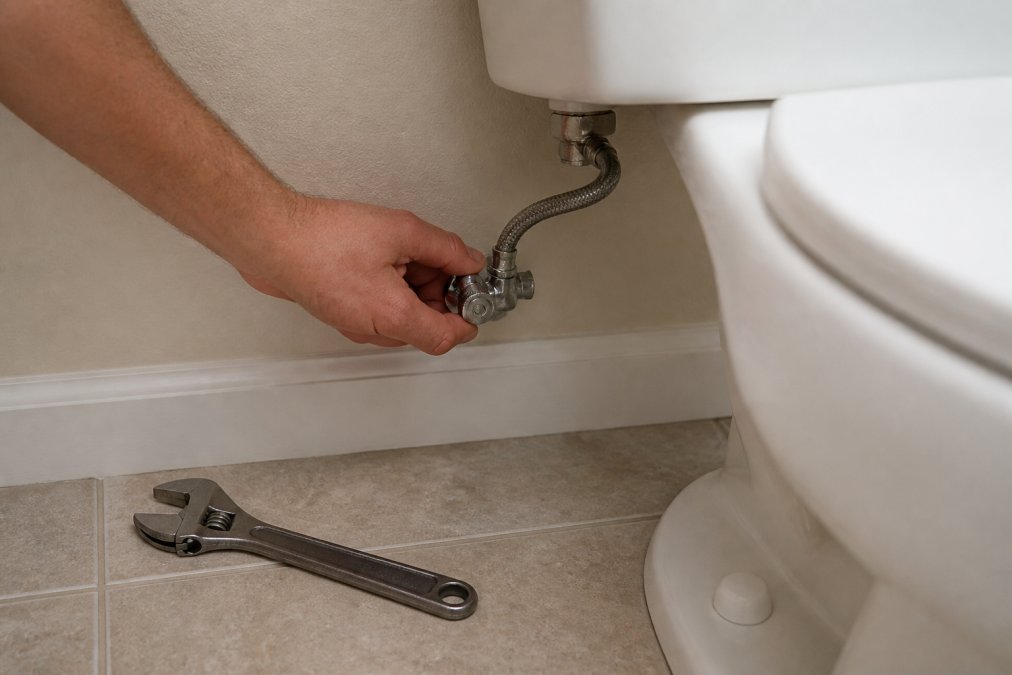
Overflowing toilets are a plumbing emergency where every second counts, and knowing how to shut off water to toilet fixtures is the fastest way to stop the damage. At PUR Plumbing, we’ve responded to many of these calls across Pasco County, and the pattern is always the same: the homeowner panics, the water keeps rising, and the floor, baseboards, and ceiling below end up soaked.

Hand turning a shut-off valve to stop overflowing toilets in a bathroom Most overflowing toilets stem from one of six predictable problems. Fix the water supply first, then diagnose the cause.
Step 1: Find the shut-off valve. Look behind and below the toilet tank.
Watch Out
Never keep flushing an overflowing toilet to “clear it.” Each flush adds more water to an already blocked bowl and pushes waste onto your floor. Shut the water off first, always.Cause 1: Clogged Drain Lines and Blocked Toilet Traps
A clogged drain line is the most common reason toilets overflow, and it usually starts in the toilet trap, the curved channel inside the base of the bowl that holds water and blocks sewer gas. When waste, paper, or debris builds up there, water can’t pass through, the bowl fills, and eventually it spills over the rim.
Signs of a toilet trap clog:
- Water rises instead of draining after a flush
- The bowl drains slowly over several minutes
- Gurgling sounds come from the drain
Cause 2: Why Is My Toilet Running Constantly? Faulty Fill and Flapper Valves
A toilet that runs constantly points to a worn fill valve or flapper valve, and that constant refilling can push a weak toilet into an overflow. The flapper is the rubber seal at the bottom of the tank; when it wears out, it fails to seal and water trickles into the bowl nonstop. The filler float controls the water level, set too high, water spills into the overflow tube and down into the bowl.
Quick checks:
- Add a few drops of food coloring to the tank. If color appears in the bowl without flushing, the flapper is leaking.
- Listen for a hissing sound after the tank refills. That’s a failing fill valve.
- Check the water level. It should sit about an inch below the overflow tube.
Symptom Likely Part Fix Toilet runs between flushes Flapper valve Replace flapper Hissing after refill Fill valve Replace fill valve Water spills into overflow tube Filler float setting Lower float level Weak, slow flush Flush valve Service or replace Cause 3: Blocked Plumbing Vent Pipes and Main Sewer Stack Issues
A blocked plumbing vent pipe traps air in the drain system, and without airflow, water can’t move down the waste pipe properly. Every fixture connects to a vent stack running up through your roof, letting air into the pipes so waste flows smoothly. When a bird’s nest, leaves, or debris blocks the vent, the system loses pressure balance and toilets flush sluggishly or overflow.
Warning signs of a vent problem:
- Gurgling from drains and toilets
- Sewer odors in the bathroom
- Multiple fixtures draining slowly at once
Cause 4: Signs of a Main Sewer Line Blockage
Signs of a main sewer line blockage go well beyond one toilet, and catching them early can save you from a full sewage backup. When the main line clogs, waste backs up into the lowest drain in the home, often a basement toilet or floor drain, and pools around multiple fixtures.
Watch for these signs:
- Several drains backing up at once
- Sewage smell in the yard or basement
- Slow drainage across the whole house
- Water pooling near the floor drain
Key Takeaway
One toilet backing up is a clog. Every toilet backing up is a main line problem. The distinction decides whether you reach for a plunger or the phone.Cause 5: Septic System Backflow and Excessive Toilet Paper
Septic system backflow happens when the tank fills faster than it drains, and too much toilet paper is often the trigger. A septic backup behaves differently from a bowl clog, and the fix is completely different.
- More than one fixture drains slowly or backs up at the same time
- Sewage smell in the yard, especially near the tank or drain field
- Gurgling from the lowest drain when you flush an upstairs toilet
- Standing water or unusually green grass over the drain field
- The toilet backs up right after a load of laundry or a long shower
What to do right now:
- Shut off the toilet supply valve (see the first section of this guide).
- Stop all water use in the house, no showers, laundry, or dishwashing.
- Do not pour chemical drain cleaner into the toilet. It kills the bacteria your septic system depends on and can damage the tank.
- Call a septic professional. A full tank needs pumping, not plunging.
Reducing the risk going forward:
- Use less toilet paper per flush, and consider a bidet attachment to cut paper volume
- Never flush wipes, paper towels, feminine products, or cat litter
- Keep grease, coffee grounds, and harsh chemicals out of the system
- Schedule pumping based on tank size and household use, not a fixed calendar
- Watch for slow drains as an early warning, they show up weeks before a backup
Key Takeaway
A single slow toilet is usually a local clog. Multiple slow fixtures plus a sewage smell in the yard point to a septic or main line problem. The distinction decides whether you reach for a plunger or the phone.Cause 6: Flushing Non-Flushable Items and Water Pressure Problems
Flushing non-flushable items is the leading cause of preventable clogs, and high water pressure can turn a minor blockage into an overflow. Here’s how to clear a non-flushable clog safely, plus how to check whether your water pressure is making things worse.
Items that should never go in a toilet:
Wet wipes, even ‘flushable’ ones
Paper towels and facial tissues
Cotton swabs and dental floss
Cooking grease
Cat litter
Feminine products
Hair
Hot water and dish soap. Squirt dish soap into the bowl, then pour a bucket of hot (not boiling) water from waist height. The soap lubricates the line and the water weight pushes the clog through. Boiling water can crack porcelain or soften wax seals, so keep it hot from the tap.
Baking soda and vinegar. Pour one cup of baking soda into the bowl, then one cup of white vinegar. Let it fizz for 10 to 15 minutes, then follow with hot water. This works best on soft, organic clogs and is safe for septic systems.
A toilet plunger used correctly. Use a flange plunger, not a cup plunger. Seat the flange in the drain hole, push down slowly to expel air, then pull up sharply. Repeat 15 to 20 times. The seal matters more than the force.
A toilet auger. For clogs that sit past the trap, a toilet auger reaches further than a plunger without scratching the porcelain. Feed it slowly, crank clockwise, and pull the clog back rather than pushing it deeper.
How to check your water pressure:
- Screw a hose-bib pressure gauge onto an outdoor spigot or a laundry sink faucet.
- Open the valve fully and read the gauge.
- Most homes perform best between 40 and 60 psi. If you consistently read above 80 psi, that is high enough to stress fixtures, supply lines, and toilet fill valves.
Watch Out
Never mix chemical drain cleaners with each other or with baking soda and vinegar. The reaction can produce dangerous fumes and heat, and the combination can damage pipes.Prevention and When to Call a Professional
Prevention comes down to a simple routine, and knowing when to call a professional saves you from costly water damage.
Monthly maintenance schedule:
- Test the flapper with food coloring
- Check the tank water level against the overflow tube
- Listen for running or hissing sounds
- Flush only toilet paper and human waste
Yearly tasks:
- Inspect the vent stack for blockages
- Schedule drain cleaning if you notice slow drains
- Have a plumber check water pressure at the main line
Frequently Asked Questions
Why is my toilet overflowing even though it’s not clogged?
The issue is likely a faulty fill valve or float that lets water continue running after the tank is full. When the fill valve fails, water keeps entering the bowl until it spills over. Another possibility is a blocked plumbing vent, which prevents proper drainage. Check the water level in the tank; if it’s above the overflow tube, adjust or replace the fill valve.
How do I stop a toilet from overflowing immediately?
First, shut off the water supply using the shut-off valve behind the toilet. Then, lift the tank lid and push the flapper down to stop water flow. If the bowl is full, wait for it to drain before flushing again. For a quick fix, pour a bucket of water into the bowl to clear a minor clog. If water keeps rising, call a professional plumber.
Can a toilet overflow without being flushed?
Yes, a toilet can overflow without flushing if the fill valve is stuck open or the float ball is set too high. Water continuously fills the bowl until it overflows. This often happens with a faulty filler float or a worn flapper valve. To prevent this, regularly check the water level and replace worn parts.
What causes a toilet to overflow when the sink is used?
When the sink is used, water drains into the same sewer line as the toilet. If there’s a main sewer line blockage, the water from the sink can back up into the toilet, causing it to overflow. This indicates a serious blockage in the main line. You should avoid using any plumbing fixtures and contact a licensed plumber immediately.
An overflowing toilet rarely fixes itself, and the longer water sits, the more damage it does to floors, walls, and ceilings. If you’ve shut off the water but the cause is still unclear, or you’re seeing signs of a main line blockage, don’t wait it out. PUR Plumbing offers fast emergency response, licensed residential and commercial service, and honest, affordable repairs backed by more than two decades of local experience. Get started with PUR Plumbing and stop the water before it spreads.
CALL 727-475-1474 and 813-579-1920


CFC 1427929
Serving Pasco County 25+ Years
info@purplumbing.com
6 Common Causes of Overflowing Toilets
September 26, 2026 | Blog
- Reageer
For more information or to request an appointment dial 727-475-1474 and 813-579-1920
Serving Pasco County 25+ Years, info@purplumbing.com
Carrollwood
Clearwater
Dunedin
Holiday
Land O Lakes
Lutz
New Port Richey
Oldsmar
Palm Harbor
Plant City
Saint Petersburg
Tampa
Tarpon Springs
Temple Terrace
Town N Country
Trinity
West Chase
Site Designed by GoProLocal